
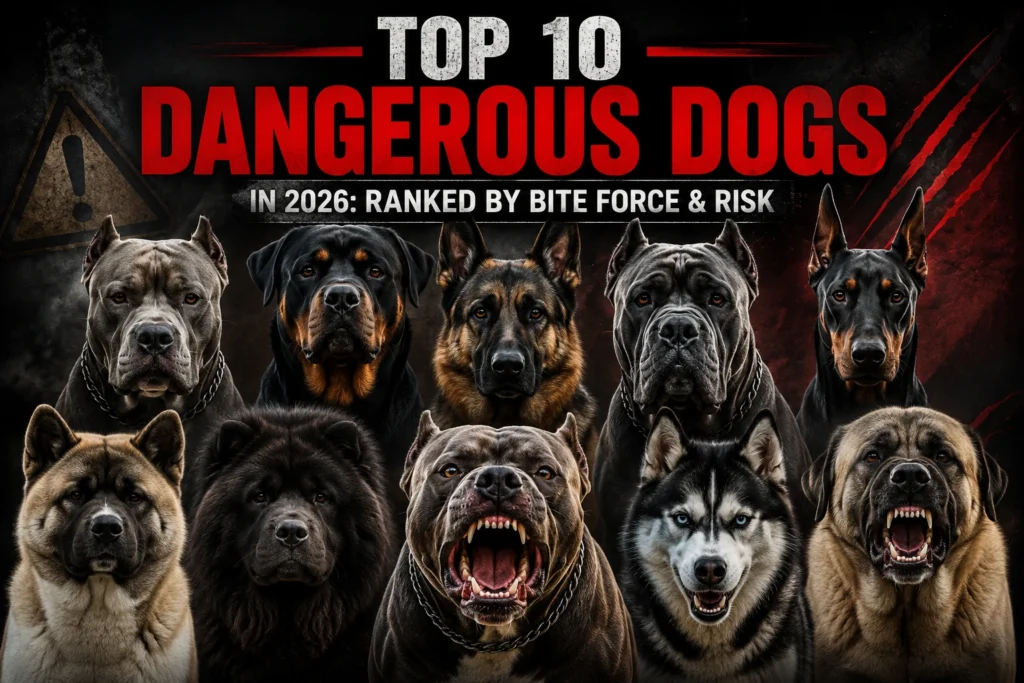
When people search for the top 10 dangerous dogs, most of what comes up is either recycled fear-mongering or a defensive wall of statistics with no real explanation behind it. This guide takes a different approach. Every breed below is ranked using three measurable data points: fatal-attack records tracked through 2024, documented bite-force research, and current homeowners-insurance claim data from 2025. Nothing here is a writer’s personal impression dressed up as a ranking.
That said, no breed is fated to be dangerous. A dog’s genetics load the gun, but ownership pulls the trigger, training, socialization, and environment shape behavior far more than breed alone does. This article walks through the ten breeds that show up most consistently in fatality and bite-force data, explains why, and then goes further than most competing guides by covering breed bans, insurance restrictions, and exactly what to do if you ever cross paths with an aggressive dog.
What Makes a Dog Breed “Dangerous”? (Our Ranking Methodology)
“Dangerous” is a slippery word when you’re talking about dogs. Size matters, but so does bite force, prey drive, guarding history, and how a breed was originally put to work. A herding dog bred to nip at cattle heels behaves differently than a mastiff bred to pin down an intruder, even if both end up biting a person. Environmental factors complicate things further, a poorly socialized dog of any breed can become a liability, while a well-trained member of a “dangerous” breed often lives out its life without incident.
Rather than rely on impressions or breed reputation, this list leans on data that’s actually trackable over time.
How We Ranked These Breeds (Data Sources & Criteria)
Three inputs drove this ranking: fatal dog attack records from CDC WONDER and DogsBite.org’s 20-year dataset (2005–2024), bite-force research compiled from veterinary and behavioral studies, and 2025 homeowners-insurance claim and restricted-breed data. Where sources disagreed, we noted it rather than picking whichever number sounded most dramatic. It’s also worth being upfront about the limitations: breed identification in bite reports is frequently inaccurate, and several breeds on this list are actually umbrella terms covering multiple recognized breeds and their mixes, a distinction almost no competing article addresses in enough depth to matter.
Top 10 Dangerous Dogs Breeds at a Glance
Before diving into each breed individually, here’s the full lineup in one place, something that’s surprisingly hard to find consolidated anywhere else, since most existing guides make you piece it together across several different articles.
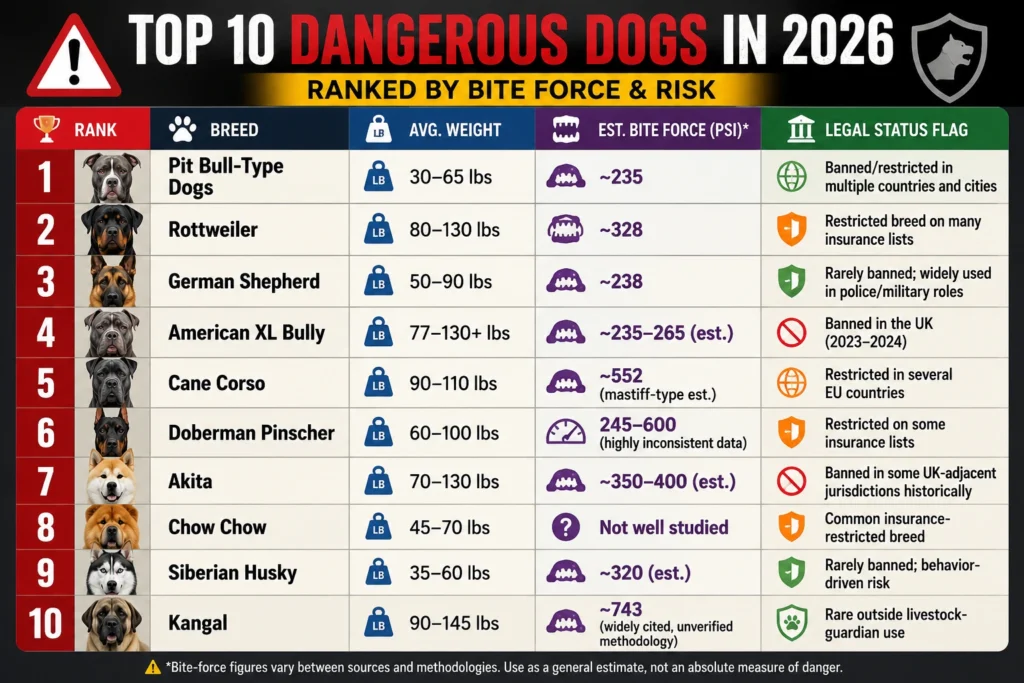
| Rank | Breed | Avg. Weight | Est. Bite Force (PSI)* | Legal Status Flag |
| 1 | Pit Bull-Type Dogs | 30–65 lbs | ~235 | Banned/restricted in multiple countries and cities |
| 2 | Rottweiler | 80–130 lbs | ~328 | Restricted breed on many insurance lists |
| 3 | German Shepherd | 50–90 lbs | ~238 | Rarely banned; widely used in police/military roles |
| 4 | American XL Bully | 77–130+ lbs | ~235–265 (est.) | Banned in the UK (2023–2024) |
| 5 | Cane Corso | 90–110 lbs | ~552 (mastiff-type est.) | Restricted in several EU countries |
| 6 | Doberman Pinscher | 60–100 lbs | 245–600 (highly inconsistent data) | Restricted on some insurance lists |
| 7 | Akita | 70–130 lbs | ~350–400 (est.) | Banned in some UK-adjacent jurisdictions historically |
| 8 | Chow Chow | 45–70 lbs | Not well studied | Common insurance-restricted breed |
| 9 | Siberian Husky | 35–60 lbs | ~320 (est.) | Rarely banned; behavior-driven risk |
| 10 | Kangal | 90–145 lbs | ~743 (widely cited, unverified methodology) | Rare outside livestock-guardian use |
*Bite-force figures circulating online vary enormously between sources, and we’ll explain exactly why later in this guide.
The 10 Most Dangerous Dog Breeds, Ranked
1. Pit Bull-Type Dogs
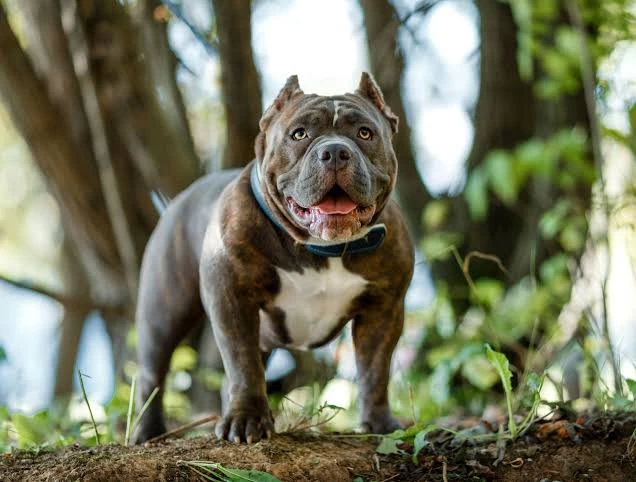
“Pit bull” isn’t a single breed, it’s an umbrella term covering the American Pit Bull Terrier, American Staffordshire Terrier, Staffordshire Bull Terrier, and their mixes. Originally developed in 19th-century England and later refined in the United States for bull-baiting and dogfighting, these dogs were selectively bred for gameness and an unwillingness to release their grip once they bite. DogsBite.org’s 20-year fatality analysis (2005–2024) attributes roughly two-thirds of U.S. dog bite deaths to pit bull-type dogs, by far the largest share of any category. At the same time, individual temperament varies enormously, and plenty of pit bull-type dogs live as gentle family companions.
The Breed Identification Problem
This is where nuance matters. Studies on breed identification have repeatedly found that shelter staff, veterinarians, and even trained professionals frequently misidentify mixed-breed dogs as “pit bulls” based on head shape alone, with DNA testing often revealing no pit bull ancestry at all. Because news reports and bite databases typically rely on visual identification rather than genetic testing, the true scale of pit bull-specific risk is almost certainly overstated in some incidents and understated in others where a pit bull-type dog was mislabeled as a different breed entirely.
2. Rottweiler

The Rottweiler’s working history traces back to Roman-era cattle droving in the German town it’s named after, and the breed later became a staple of European and American police work. Weighing up to 130 pounds with an estimated bite force around 328 PSI, Rottweilers rank second in most long-term fatality datasets, historically responsible for somewhere between 8–10% of tracked U.S. dog bite deaths depending on the study period. What makes them tricky is the contrast between their behavior at home and around strangers: a well-socialized Rottweiler is typically affectionate and even gentle with its own family, but territorial instincts can surface quickly around unfamiliar visitors if training hasn’t addressed it directly.
3. German Shepherd
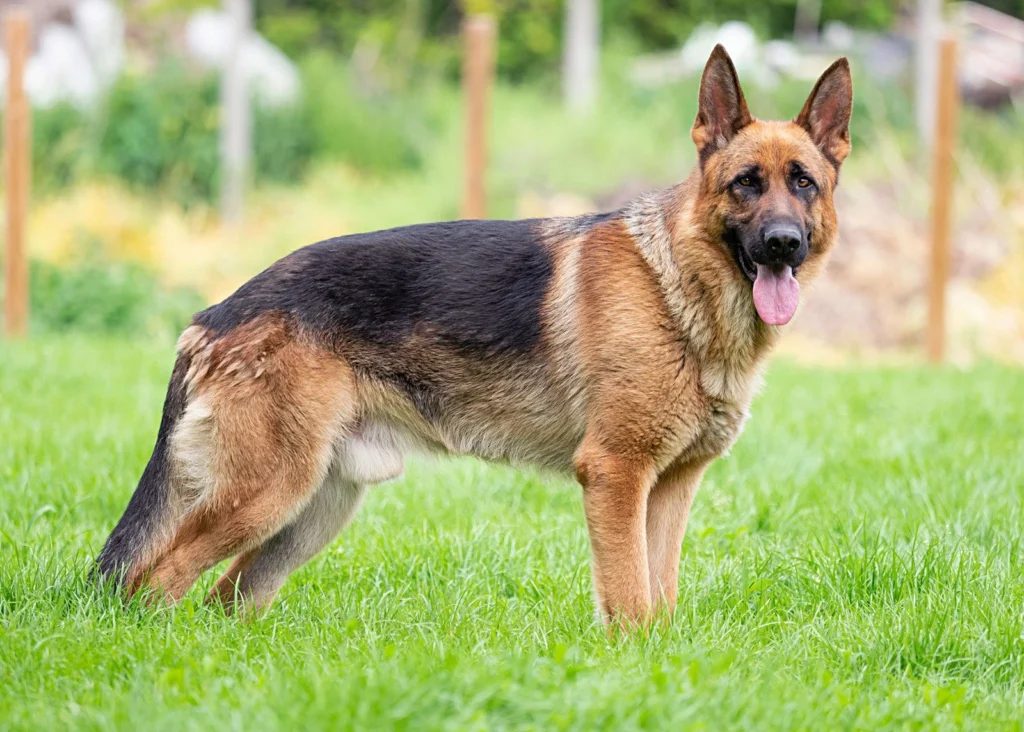
German Shepherds were developed in the late 1800s by Captain Max von Stephanitz specifically for herding, which explains their intelligence, physical stamina, and eagerness to work, traits that made them the default choice for police, military, and service-dog roles worldwide. That same trainable protective drive shows up in bite-injury statistics, with an estimated bite force near 238 PSI. One nuance worth flagging that most competing articles skip entirely: German Shepherds are also one of the most commonly owned breeds in the U.S., so their raw bite counts are partly a function of sheer population size rather than proportionally higher aggression per dog, a rate-versus-raw-count distinction that changes how the data should be read.
4. American XL Bully

The American XL Bully is a larger, more heavily muscled variant of the American Bully, and it’s the most newsworthy entry on this entire list. A cluster of serious and fatal attacks in the UK through 2023 pushed the breed into the national spotlight and prompted the fastest breed-specific legislative response in recent memory.
Why the UK Banned This Breed in 2023–2024
The UK government added the XL Bully to the Dangerous Dogs Act 1991 in a phased rollout: from December 2023, it became illegal to sell, gift, or breed XL Bullies; by February 2024, owners were required to register existing dogs, keep them muzzled and on a lead in public, and ensure they were neutered; unregistered ownership became a criminal offense. Critics of the ban argue it targets a loosely defined “type” rather than a formally recognized breed and does little to address the unregulated backyard breeding that produced many of the dogs involved in the original attacks, a debate that mirrors older arguments over pit bull bans.
5. Cane Corso

Bred in Italy as a guardian of livestock and property, the Cane Corso descends from ancient Roman war and hunting dogs and was historically used to control wild boar. Comparative bite-force research on mastiff-type breeds has cited figures around 552 PSI, among the highest of any domestic dog category. Cane Corsos have surged in popularity across North America over the past decade as a status and guard-dog breed, and a rising share of serious-incident reports appears tied to inexperienced owners taking on a 100-pound guardian breed without the training infrastructure it genuinely requires.
6. Doberman Pinscher
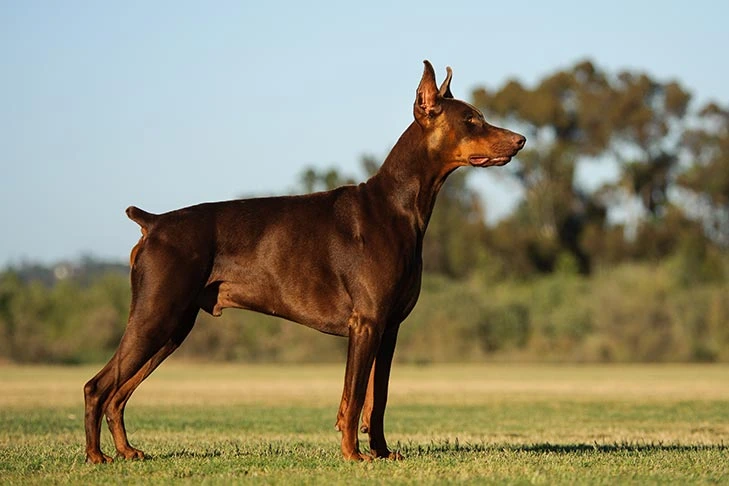
Louis Dobermann, a German tax collector, developed this breed in the 1890s specifically to protect him on his rounds, a detail that explains the Doberman’s sharp, alert temperament better than any modern marketing copy could. Athletic enough to reach speeds near 32 mph, Dobermans were heavily involved in fatal-attack statistics through the 1970s before targeted breeding programs shifted the standard toward a calmer companion temperament, and involvement in fatalities has dropped substantially since. Bite-force estimates for this breed are a useful case study in bad data: some sources cite roughly 245 PSI, others claim figures as high as 600 PSI, with no consistent methodology behind either number, a reminder to treat viral PSI statistics skeptically.
7. Akita
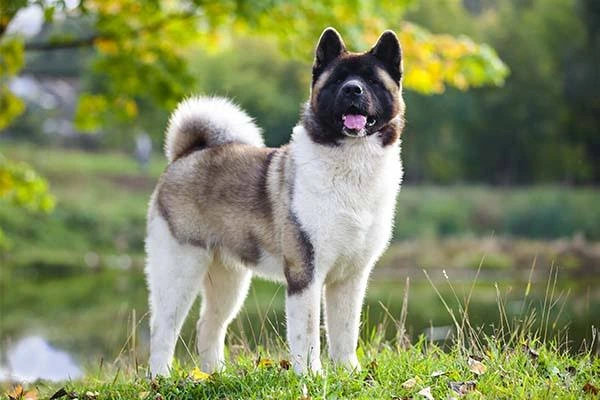
Originating in Japan as a big-game hunting and guardian breed, the Akita belongs to the same spitz family as the Chow Chow and Alaskan Malamute. Akitas are famously one-family dogs: intensely loyal at home, but naturally aloof and often wary of strangers and other dogs. Research on breed temperament has specifically flagged Akitas for elevated territoriality compared to more generalist breeds. Their independent streak, useful for a dog once expected to make guarding decisions without human direction, also makes them noticeably harder to train than more biddable working breeds.
8. Chow Chow

The Chow Chow is one of the oldest recognized dog breeds, with a documented history in China stretching back thousands of years, and it carries a distinctly cat-like independence that catches many new owners off guard. Despite a compact size relative to other breeds on this list, Chow Chows appear disproportionately often in bite-injury statistics. Part of the explanation is behavioral rather than physical: their teddy-bear appearance invites strangers to approach and pet them, triggering defensive reactions from a breed that, by temperament, doesn’t actually want that kind of attention. Several major U.S. insurers list Chow Chows explicitly among their restricted breeds.
9. Siberian Husky

Bred by the Chukchi people of northeastern Siberia for endurance sled-pulling, Huskies were never developed as guard dogs, their friendliness toward strangers is well documented. Their risk profile is different from most other breeds on this list: a strong prey drive toward smaller animals, combined with high energy levels that can turn destructive or unpredictable when unmet, has been tied to a documented number of serious incidents involving small children left unsupervised. Huskies have also become a popular “look” breed thanks to their wolf-like appearance, which sometimes puts them in homes unprepared for the daily exercise and mental stimulation the breed genuinely needs.
10. Kangal
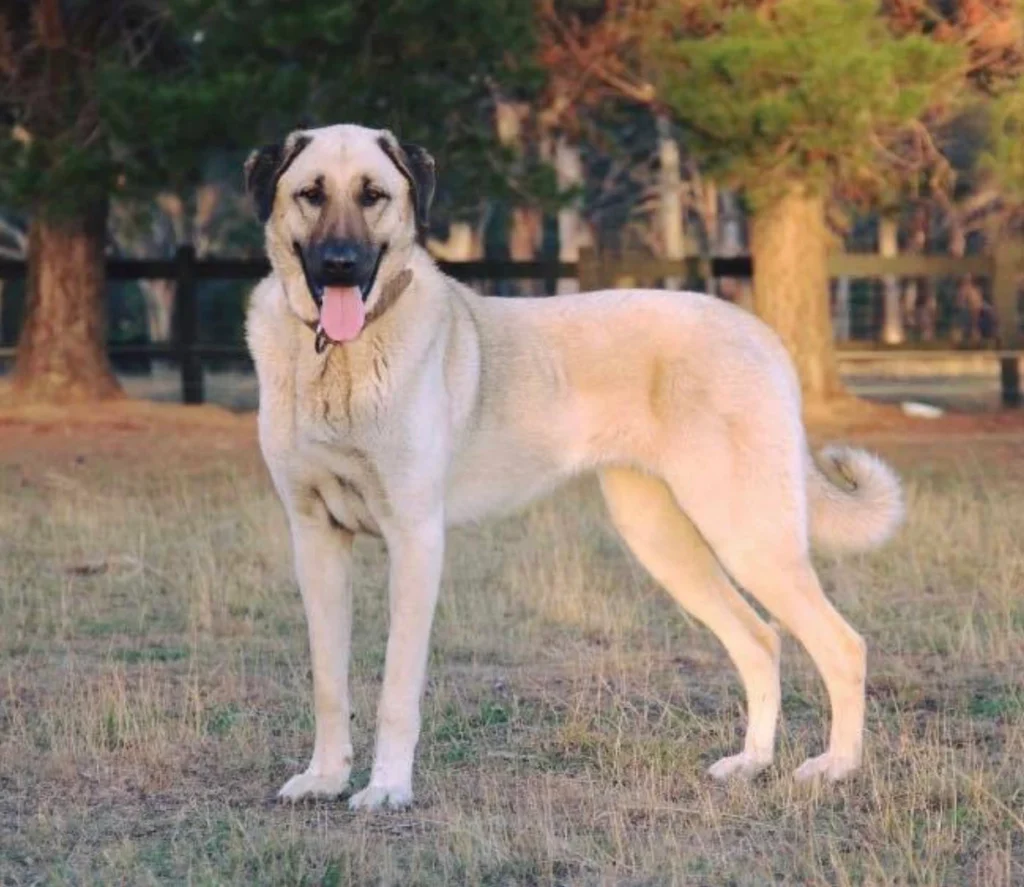
The Kangal is a Turkish livestock guardian breed weighing up to 145 pounds, historically bred to independently fend off wolves and even bears while protecting flocks with no human guidance nearby. That independence is precisely why the breed’s own parent club explicitly discourages personal protection or bite-work training, a Kangal doesn’t need to be taught to guard aggressively; it needs to be taught restraint. The breed remains rare as a household pet in the U.S. and UK, and its inclusion here is driven less by fatality volume and more by one standout statistic that deserves its own explanation.
The World’s Strongest Bite Force (743 PSI)
The figure most often repeated for the Kangal, 743 PSI, is one of the most widely cited numbers in any dog-breed article online, yet it’s rarely sourced to a clear, replicable study. For context, human bite force averages somewhere between 120 and 160 PSI, so even a conservative reading puts the Kangal’s bite at four to five times stronger than a person’s. Treat the exact number with some skepticism, but the underlying point, that this breed’s raw physical capability is exceptional, is well supported by its historical role as a solo predator-deterrent.
Bite Force Comparison: How Hard Can Each Breed Bite?
Bite-force numbers get repeated constantly across dog-breed content, but almost none of the commonly cited figures, including the Kangal’s famous 743 PSI, trace back to a single controlled, peer-reviewed comparative study. Most originate from inconsistent secondary sources and get copied from article to article without anyone checking the original methodology. That doesn’t mean the numbers are meaningless; relative bite-force rankings tend to line up reasonably well with skull size and jaw musculature. It does mean readers should treat PSI figures as directional estimates rather than precise measurements, which is a distinction almost no competing guide makes clear.
Is Breed Really the Biggest Risk Factor?
Breed reputation drives most of the conversation around dangerous dogs, but the data tells a more complicated story than “big guard breed equals dangerous, small companion breed equals safe.”
The Small-Breed Data Nobody Talks About
A University of Pennsylvania study surveying roughly 6,000 dog owners found that small breeds like Dachshunds and Jack Russell Terriers actually showed higher rates of aggression toward strangers than several breeds that regularly top “dangerous dog” lists, with about one in five Dachshunds reported to have bitten or attempted to bite an unfamiliar person. The injuries these breeds cause are typically far less severe simply because of their size, which is exactly why they rarely make headlines or fatality statistics.
⚠️ Myth vs. Fact Myth: Small dog breeds aren’t genuinely dangerous. Fact: Several small breeds show higher bite rates toward strangers than many large breeds on this list, they just cause less physical damage per bite.
Reporting Bias & Breed Misidentification
Large-breed bites are far more likely to require medical attention and end up in a database. A Chihuahua nip that doesn’t break skin almost never gets reported. That gap inflates the apparent risk of large, powerful breeds relative to small ones, even before accounting for breed misidentification. None of this erases the real danger posed by the breeds on this list, it simply means the full picture needs more context than a raw fatality count provides.
💡 Expert Tip: According to certified dog behaviorists, breed explains a meaningful share of a dog’s baseline drive and physical capability, but the single strongest predictor of bite risk in any individual dog is the quality and consistency of its early socialization between roughly 8 and 16 weeks of age, a window that matters more than breed selection alone.
Fresh 2024–2025 Data: What’s Changed Recently
Most competing guides on this topic still cite fatality data from 2005–2017 or 2005–2019. That data is now several years stale, and the picture has shifted meaningfully since then.
Fatal Dog Attacks Hit a Record High in 2024
📊 Stat Callout: CDC WONDER data recorded 127 fatal dog attacks in the United States in 2024, the highest single-year total ever documented, and a 165% increase from the 48 deaths recorded in 2019.
Several factors likely contributed to this spike, and pandemic-era dog ownership is one commonly discussed explanation: the surge in puppy adoptions during 2020–2021 lockdowns produced a generation of dogs that missed critical early socialization windows due to reduced exposure to strangers, other dogs, and normal public settings. Insurance data tells a related story, homeowners insurers paid out an estimated $1.86 billion in dog-bite liability claims in 2025, with the average cost per claim rising roughly 209% since 2016, driven by both medical cost inflation and larger legal settlements.
Do Breed Bans Actually Work? (BSL Effectiveness)
Breed-specific legislation remains one of the most contested tools in this space. Both the American Veterinary Medical Association and the American Kennel Club favor “penalize the deed, not the breed” policies over blanket bans, arguing that BSL is expensive to enforce and doesn’t reliably reduce bite rates. The Netherlands repealed its national pit bull ban after government-commissioned research found no measurable safety improvement. That said, targeted bans following specific incidents, like the UK’s XL Bully rollout, tend to draw strong short-term public support even where long-term effectiveness data is still limited.
Where Are These Breeds Banned, Restricted, or Uninsurable?
Countries & Cities With Breed-Specific Bans
| Country/Region | Breeds Commonly Restricted | Notes |
| United Kingdom | XL Bully, Pit Bull Terrier, Japanese Tosa, Dogo Argentino, Fila Brasileiro | Enforced under the Dangerous Dogs Act 1991, amended 2023–2024 |
| Germany | Pit Bull-type, American Staffordshire Terrier, Bull Terrier (varies by state) | State-level (Länder) lists rather than a single federal ban |
| Australia | Pit Bull Terrier, Japanese Tosa, Dogo Argentino, Fila Brasileiro, Presa Canario | Federal import restrictions plus state-level ownership rules |
| Denmark | 13 breeds including Pit Bull-type and Tosa | Among the most extensive EU breed-ban lists |
| India | 23 breeds flagged in a 2024 draft notification, including Rottweiler, Cane Corso, Pit Bull-type | Draft rules target import and breeding, not existing pets |
| Select U.S. cities | Varies widely by municipality | No federal U.S. breed ban exists; regulation is local |
Homeowners Insurance & Restricted-Breed Lists
Beyond formal legal bans, many major U.S. homeowners and renters insurance carriers maintain their own restricted-breed lists that can affect coverage, premiums, or require a separate liability rider. Breeds commonly flagged include Rottweilers, Pit Bull-type dogs, Dobermans, Chow Chows, Akitas, and wolf hybrids, though practices differ significantly by carrier and by state, a handful of states, including Michigan, Pennsylvania, and New York, restrict or prohibit insurers from denying coverage based on breed alone. If you own or plan to adopt any breed on this list, confirming your specific policy’s stance directly with your insurer is worth doing before, not after, you bring the dog home.
What to Do If You Encounter an Aggressive Dog
Warning Signs Before an Attack
A wagging tail doesn’t always mean a friendly dog, a stiff, high, rigid wag can actually signal tension rather than excitement. Watch instead for a combination of cues: a stiff, still body posture, raised hackles along the spine, a hard, unbroken stare, retracted lips exposing teeth, and a low, sustained growl. Any one of these alone isn’t necessarily alarming, but several appearing together are a clear signal to create distance immediately, calmly, and without turning your back.
If a Dog Attacks or Bites You
🚨 Emergency Steps
- Do not run or scream, sudden movement and noise can trigger chase and prey instincts.
- Stay as still as possible, or back away slowly at an angle rather than facing the dog directly.
- If you have a bag, jacket, or other object, use it as a barrier between you and the dog.
- If knocked down, curl into a ball and protect your face, neck, and throat with your arms.
- Once safe, seek medical attention for any bite, even minor-looking punctures carry a real infection risk.
- Report the incident to local animal control so the dog’s history can be tracked.
Responsible Ownership: Reducing Risk With These Breeds
Training & Socialization Essentials
The 8-to-16-week window is the single most important stretch of a puppy’s development for shaping adult temperament, and it’s the same window most new owners underuse. Positive-reinforcement training paired with wide, low-pressure exposure to new people, dogs, sounds, and environments during this period does more to prevent adult aggression than any amount of breed research. Working and guardian breeds in particular benefit from professional obedience training early, since their natural drive needs a constructive outlet rather than suppression through harsh correction, which tends to increase fear-based aggression rather than reduce it.
Questions to Ask Before Adopting a Powerful Breed
Before bringing home any breed on this list, it’s worth honestly answering a short set of questions: Do you have prior experience handling a strong, high-drive dog? Is your yard securely fenced, and do you have time for genuine daily exercise, not just a quick walk? Do you have access to a professional trainer or behaviorist if issues emerge? Have you confirmed your homeowners or renters insurance actually covers the breed? And if you have young children or small pets at home, have you researched how this specific breed’s prey drive and guarding instincts typically interact with both?
Frequently Asked Questions
Are pit bulls really the most dangerous dog breed? By raw fatal-attack numbers, pit bull-type dogs are involved in the largest share of U.S. dog bite deaths in long-term tracking data. However, “pit bull” covers multiple breeds and mixes, and breed misidentification means the true per-dog risk is harder to pin down than the headline statistic suggests.
Which dog breed has the strongest bite force? The Kangal is most commonly cited, with a widely circulated (though not rigorously sourced) figure of roughly 743 PSI, several times stronger than an average human bite.
Can a dangerous dog breed be a safe family pet? Yes. With early socialization, consistent training, and an owner experienced enough to manage the breed’s natural drive, breeds on this list regularly live as safe, affectionate family companions.
Which countries ban the most dog breeds? Denmark, Germany, and the UK maintain some of the most extensive breed-specific restriction lists, though enforcement and specific breeds covered vary by country and, in Germany’s case, by state.
Does breed-specific legislation (BSL) actually work? Evidence is mixed and often disputed. Major veterinary and kennel organizations generally favor individual “dangerous dog” laws over blanket breed bans, and at least one national repeal (the Netherlands) followed research showing no clear safety benefit.
Are small dog breeds more aggressive than large ones? Some research suggests certain small breeds, including Dachshunds and Jack Russell Terriers, show higher rates of biting toward strangers than several larger “dangerous” breeds, they simply cause less severe injury due to their size.
What should I do if I’m bitten by a dog? Seek medical attention promptly, even for a bite that looks minor, since infection risk is significant. Report the incident to local animal control and document the dog’s owner and location if possible.
What’s the difference between an “aggressive” breed and a “dangerous” breed? “Aggressive” typically describes behavioral tendency, how quickly or often a dog displays warning or biting behavior. “Dangerous” factors in the physical outcome of that behavior, which is why large, powerful breeds dominate danger rankings even when smaller breeds show comparable or higher aggression rates.
Final Verdict
The breeds on this list share real, measurable traits, strength, guarding instinct, and in some cases a documented history in fatal-attack data, that justify calling them the top 10 dangerous dogs by the numbers. But genetics is only half the equation. Every study cited here points to the same underlying conclusion: early socialization, consistent training, and informed, prepared ownership matter as much as breed selection, and often more. If you’re considering one of these breeds, the smartest first step isn’t avoidance, it’s research, honest self-assessment, and a solid relationship with a qualified trainer before the dog ever comes home.
Top 10 Most Dangerous Cities in America | Shocking Report Read Now