
Top 10 Bass Lures
The top 10 bass lures are the Texas-rigged worm, spinnerbait, squarebill crankbait, football jig, walking topwater bait, swimbait, chatterbait, wacky-rigged stick bait, deep-diving crankbait, and hollow-body frog. Together, they cover every season, water clarity, and bass behavior pattern.
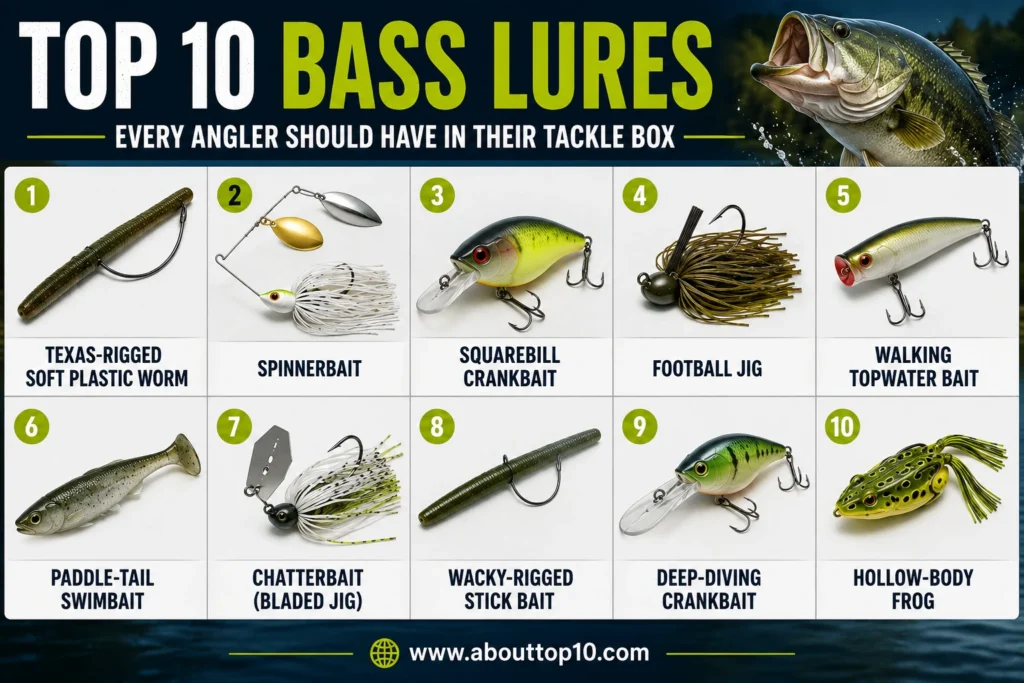
Walk into any tackle shop and you’ll find thousands of lures promising to be the next big thing. Most anglers, though, catch the majority of their bass on a small rotation of proven baits.
This guide breaks down the ten lures that consistently show up in the boats of tournament pros and weekend anglers alike. These aren’t trendy picks. They’re the baits that have caught bass reliably for decades, across largemouth, smallmouth, and spotted bass fisheries alike.
We’ll cover exactly when and where each one shines, how to work it, what colors and sizes to start with, and where each bait falls short. Whether you’re rigging your first rod or restocking a box you’ve fished for twenty years, this is meant to be a practical, no-fluff reference you can actually use on the water.
Quick Verdict
If you could only carry three lures for a season of bass fishing, a Texas-rigged worm, a squarebill crankbait, and a spinnerbait would cover the widest range of conditions. Add a topwater walking bait for low-light hours and a jig for cold-water and heavy-cover situations, and you’ve got a setup capable of catching bass in nearly any lake, river, or reservoir in North America or Europe.
Beginners should start with soft plastics like the Texas rig and a wacky-rigged stick bait. They’re forgiving, versatile, and don’t require the timing or retrieve precision that topwater baits and jigs demand.
How We Selected These Bass Lures
This list draws on a mix of long-standing angling consensus and current tournament trends, cross-referenced against sources widely respected in the bass fishing community, including Bassmaster, Major League Fishing (MLF), Wired2Fish, Tackle Warehouse’s angler resources, Outdoor Life, and Field & Stream.
Selection criteria included:
- Versatility: Does the lure work across multiple seasons, water types, and bass species?
- Proven track record: Has it consistently produced results in tournament fishing and among everyday anglers over many years, not just a single viral season?
- Skill accessibility: Can beginners pick it up and catch fish, or does it require significant technique refinement?
- Category coverage: We intentionally included a mix of soft plastics, hard baits, topwater, and bladed baits so this list functions as a complete starter (or refresher) tackle box rather than ten variations on the same idea.
We also cross-checked recommended retrieve techniques, colors, and seasonal timing against widely cited professional advice, since a lure’s real-world effectiveness depends heavily on how and when it’s fished, not just which one is tied on.
Top 10 Bass Lures (Quick List)
- Texas-Rigged Soft Plastic Worm
- Spinnerbait
- Squarebill Crankbait
- Football Jig
- Walking Topwater Bait
- Paddle-Tail Swimbait
- Chatterbait (Bladed Jig)
- Wacky-Rigged Stick Bait
- Deep-Diving Crankbait
- Hollow-Body Frog
Bass Lure #1 Review: Texas-Rigged Soft Plastic Worm
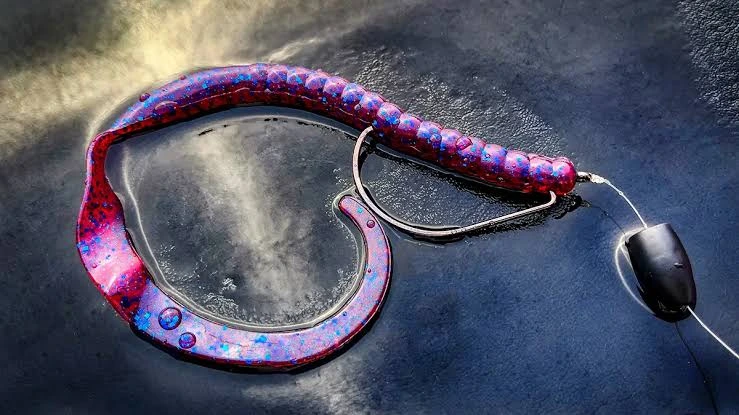
The Texas rig is probably the single most versatile bass presentation ever devised. A soft plastic worm, rigged weedless with a bullet weight and offset hook, can be fished through nearly any cover without constantly snagging.
It works because it mimics a wide range of natural forage, moves subtly, and can be fished at any depth or speed. This is the lure most pros recommend when someone asks what to tie on if they’re not sure what else to use.
| Lure Type | Soft plastic, weedless rig |
| Best Water Conditions | Clear to moderately stained water; works around vegetation, rock, and wood |
| Best Season | Spring through fall; slows down but still productive in winter |
| Target Species | Largemouth, smallmouth, spotted bass |
| Retrieve Technique | Slow drag-and-pause along the bottom; occasional light hops |
| Skill Level | Beginner-friendly |
| Recommended Colors/Sizes | Green pumpkin and black/blue in 6–7.5 inch worms; junebug in stained water |
Pros: Extremely versatile, weedless design handles heavy cover, effective in nearly every season.
Cons: Slow presentation isn’t ideal for covering water quickly; requires patience to detect subtle bites.
Bass Lure #2 Review: Spinnerbait
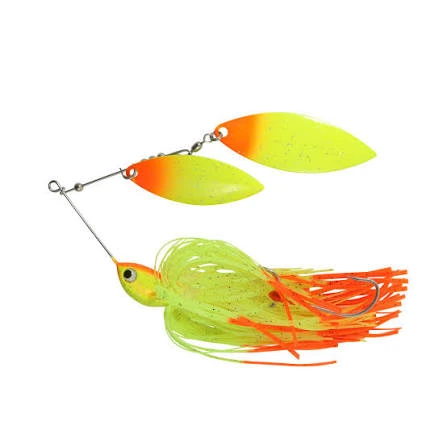
Spinnerbaits combine flash, vibration, and a lifelike swimming action, making them one of the best search baits for covering water quickly while still triggering reaction strikes.
They shine in stained or murky water where bass rely more on vibration and flash than sight, and around emerging vegetation, riprap, or laydowns in the spring and fall.
| Lure Type | Bladed, wire-frame reaction bait |
| Best Water Conditions | Stained to murky water; also effective in wind-chopped clear water |
| Best Season | Spring and fall, especially during shad spawns and cooling water temperatures |
| Target Species | Largemouth, smallmouth |
| Retrieve Technique | Steady retrieve just below the surface; slow-roll near bottom in colder water |
| Skill Level | Beginner-friendly |
| Recommended Colors/Sizes | White or chartreuse/white in 3/8–1/2 oz; willow blades for clear water, Colorado blades for murky water |
Pros: Covers water fast, weedless enough for moderate cover, works in low-visibility conditions.
Cons: Less effective in gin-clear water under bright sun; can require rod-tip feel to detect subtle strikes.
Bass Lure #3 Review: Squarebill Crankbait
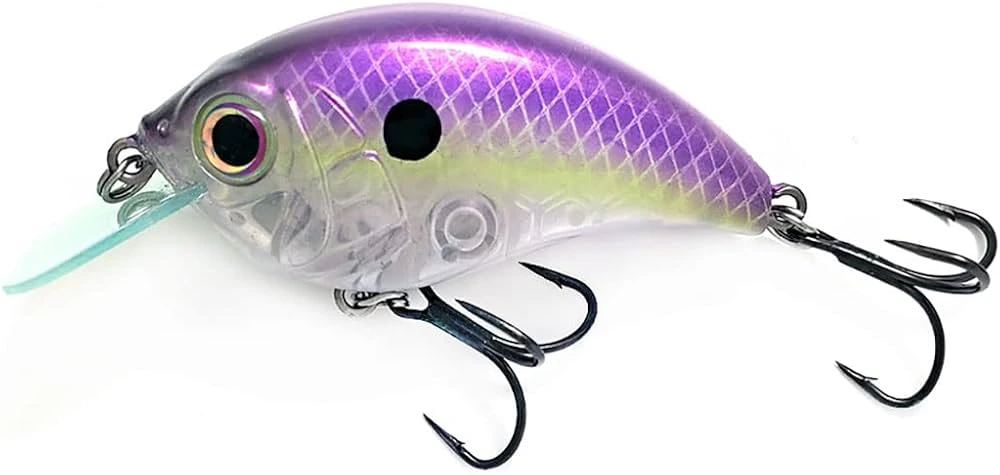
Squarebill crankbaits are built to deflect off cover rather than avoid it, which is exactly why they excel around shallow rock, dock pilings, and submerged wood. That deflection often triggers reaction strikes from bass that would otherwise ignore a bait.
They’re a staple pre-spawn and early summer bait, especially in water depths of two to six feet where bass are actively feeding shallow.
| Lure Type | Shallow-diving hard bait |
| Best Water Conditions | Stained water with shallow hard cover: rock, wood, dock pilings |
| Best Season | Pre-spawn (early spring) and early summer |
| Target Species | Largemouth, smallmouth |
| Retrieve Technique | Steady retrieve with intentional bottom/cover contact; pause after deflections |
| Skill Level | Beginner to intermediate |
| Recommended Colors/Sizes | Craw patterns and shad patterns in 2–2.75 inch bodies |
Pros: Excellent cover-deflection action, easy to fish, great reaction-strike trigger.
Cons: Limited depth range; less effective once bass move to deeper structure in summer.
Bass Lure #4 Review: Football Jig
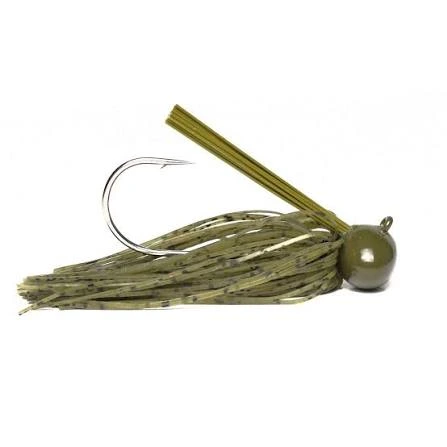
The football jig is a rock-and-structure specialist. Its wide, rounded head is designed to roll over rocky bottoms without constantly hanging up, making it one of the best baits for probing deep, rocky main-lake structure.
Paired with a craw-style trailer, it mimics crawfish crawling along the bottom, one of a bass’s most reliable year-round food sources.
| Lure Type | Bottom-contact jig with rounded head |
| Best Water Conditions | Rocky or gravel bottoms, main-lake points, and humps |
| Best Season | Summer and fall, when bass relate to deeper structure |
| Target Species | Largemouth, smallmouth, spotted bass |
| Retrieve Technique | Slow drag along bottom with occasional pauses; avoid excessive hopping |
| Skill Level | Intermediate |
| Recommended Colors/Sizes | Green pumpkin or brown/orange in 1/2–3/4 oz, matched with a craw trailer |
Pros: Excellent for deep, rocky structure; realistic crawfish presentation; strong hookup ratio.
Cons: Requires good bottom “feel” to fish effectively; steeper learning curve than most baits on this list.
Bass Lure #5 Review: Walking Topwater Bait
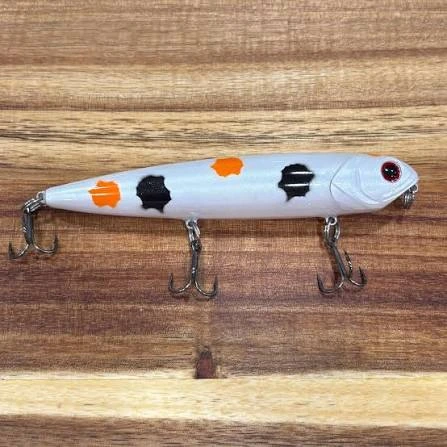
Walking topwater baits, fished with the classic “walk-the-dog” side-to-side retrieve, are one of the most exciting and effective ways to catch bass during low-light hours or calm mornings and evenings.
They’re especially productive over submerged grass flats, around schooling baitfish, and during periods when bass are actively feeding near the surface.
| Lure Type | Topwater walking bait |
| Best Water Conditions | Calm to slightly rippled water; clear to moderately stained |
| Best Season | Late spring through early fall, best in low-light conditions |
| Target Species | Largemouth, smallmouth |
| Retrieve Technique | Rhythmic “walk-the-dog” wrist twitches to create a zig-zag surface motion |
| Skill Level | Intermediate (timing the retrieve takes practice) |
| Recommended Colors/Sizes | Bone/white and chrome/black back in 4–5 inch sizes |
Pros: Exciting visual strikes, highly effective during low-light feeding windows.
Cons: Less productive in bright midday sun or rough, choppy water; requires retrieve timing practice.
Bass Lure #6 Review: Paddle Tail Swimbait
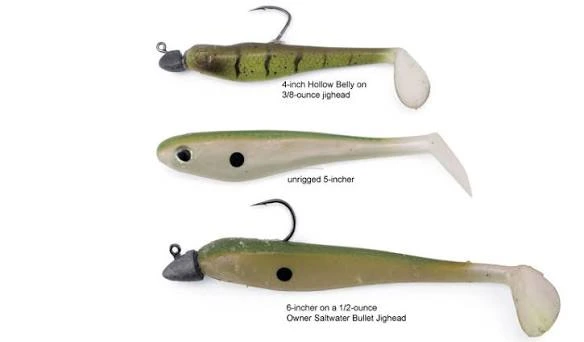
Paddle-tail swimbaits deliver a realistic swimming action with minimal effort, making them an excellent choice for covering water and imitating shad, bluegill, or other baitfish that bass key in on throughout the year.
They’re particularly effective when bass are actively chasing baitfish schools, whether that’s suspended over deep structure or cruising shallow flats.
| Lure Type | Soft plastic swimbait, typically rigged on a jighead |
| Best Water Conditions | Open water, clear to stained; effective around suspended baitfish |
| Best Season | Year-round, especially strong in summer and fall shad patterns |
| Target Species | Largemouth, smallmouth, spotted bass |
| Retrieve Technique | Steady, moderate-speed retrieve; occasional pauses to let the tail flutter |
| Skill Level | Beginner-friendly |
| Recommended Colors/Sizes | Natural shad or white in 3.5–5 inch bodies on 1/4–3/8 oz jigheads |
Pros: Simple, effective retrieve; realistic profile and action; works across seasons.
Cons: Less effective around heavy cover; jighead can hang up on rock or wood without a weedless option.
Bass Lure #7 Review: Chatterbait (Bladed Jig)
The chatterbait combines a jig’s profile with a vibrating blade attached at the head, producing a distinct thumping vibration that draws strikes even in murky water or heavy vegetation.
It’s become a go-to transitional bait, particularly effective during the pre-spawn and fall feeding periods when bass are aggressively feeding but water clarity or temperature makes finesse baits less effective.
| Lure Type | Bladed jig (vibrating jig) |
| Best Water Conditions | Stained to murky water; effective around submerged grass |
| Best Season | Pre-spawn and fall |
| Target Species | Largemouth, smallmouth |
| Retrieve Technique | Steady retrieve just above cover, occasionally ripping through grass |
| Skill Level | Beginner to intermediate |
| Recommended Colors/Sizes | White or green pumpkin in 3/8–1/2 oz, paired with a paddle-tail trailer |
Pros: Strong vibration draws reaction strikes even in poor visibility; effective around vegetation.
Cons: Blade can foul with debris in heavy grass; less effective in ultra-clear, calm water.
Bass Lure #8 Review: Wacky Rigged Stick Bait
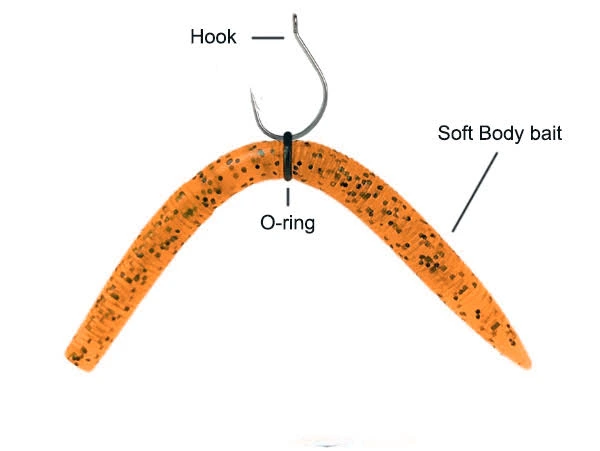
Few baits generate strikes as consistently as a wacky-rigged stick worm (the style popularized by baits like the Yamamoto Senko). Its subtle, shimmying fall on a weightless rig triggers bites from pressured bass that ignore louder, faster presentations.
It’s an ideal finesse bait for clear water, heavily fished lakes, and situations where bass have grown wary of typical reaction baits.
| Lure Type | Soft plastic stick bait, wacky-rigged (weightless, hooked through the middle) |
| Best Water Conditions | Clear water; heavily pressured lakes and ponds |
| Best Season | Spring through fall; especially strong around the spawn |
| Target Species | Largemouth, smallmouth, spotted bass |
| Retrieve Technique | Cast and let it fall naturally; occasional light twitches, mostly a finesse presentation |
| Skill Level | Beginner-friendly |
| Recommended Colors/Sizes | Green pumpkin or watermelon in 5-inch sticks |
Pros: Extremely simple to fish, highly effective on pressured fish, minimal gear required.
Cons: Weightless design limits depth and casting distance; not ideal in heavy wind or current.
Bass Lure #9 Review: Deep Diving Crankbait
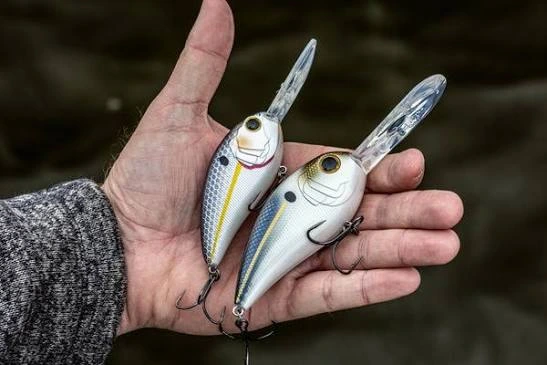
Deep-diving crankbaits are built to reach depths of 10 to 20+ feet, making them essential for locating and triggering summer bass relating to deep ledges, creek channels, and offshore humps.
This is a search bait for anglers willing to cover deep structure methodically, often used in combination with electronics to locate schools of offshore bass.
| Lure Type | Deep-diving hard bait |
| Best Water Conditions | Clear to moderately stained; deep offshore structure |
| Best Season | Summer, when bass relate to deep ledges and channels |
| Target Species | Largemouth, smallmouth, spotted bass |
| Retrieve Technique | Steady, grinding retrieve designed to make bottom contact at target depth |
| Skill Level | Intermediate to advanced |
| Recommended Colors/Sizes | Chartreuse/black back or natural shad in 3–3.5 inch bodies |
Pros: Reaches deep offshore structure other baits can’t, effective for locating summer schools.
Cons: Requires fishing electronics or strong structure knowledge to be effective; physically tiring to fish all day.
Bass Lure #10 Review: Hollow-Body Frog
Hollow-body frogs are the go-to bait for fishing thick matted vegetation, lily pads, and slop where almost no other lure can be presented without immediately fouling.
Their weedless design lets anglers work heavy cover that holds big, cover-oriented bass, particularly during the heat of summer when bass tuck under dense mats for shade and ambush opportunities.
| Lure Type | Hollow-body topwater frog |
| Best Water Conditions | Heavy vegetation, lily pads, matted grass |
| Best Season | Summer, when vegetation is thickest |
| Target Species | Largemouth (rarely effective for smallmouth or spotted bass) |
| Retrieve Technique | Slow, pausing walk-the-dog action across the mat; pause over holes and edges |
| Skill Level | Intermediate to advanced (hookset timing is critical) |
| Recommended Colors/Sizes | Black or white in standard 2.75–3.5 inch sizes |
Pros: Only real option for fishing thick matted cover; produces explosive topwater strikes.
Cons: Requires a delayed hookset to avoid missing fish; largely ineffective outside heavy vegetation.
Feature Comparison Table
| Lure | Type | Best Season | Best Cover | Skill Level |
| Texas-Rigged Worm | Soft plastic | Spring–Fall | Vegetation, wood, rock | Beginner |
| Spinnerbait | Bladed reaction bait | Spring, Fall | Stained water, riprap | Beginner |
| Squarebill Crankbait | Shallow hard bait | Pre-spawn, Early Summer | Rock, wood, docks | Beginner–Intermediate |
| Football Jig | Bottom-contact jig | Summer, Fall | Rock, points, humps | Intermediate |
| Walking Topwater | Topwater hard bait | Late Spring–Early Fall | Open water, grass flats | Intermediate |
| Paddle-Tail Swimbait | Soft plastic swimbait | Year-round | Open water, suspended baitfish | Beginner |
| Chatterbait | Bladed jig | Pre-spawn, Fall | Grass, stained water | Beginner–Intermediate |
| Wacky-Rigged Stick Bait | Soft plastic | Spring–Fall | Clear water, pressured lakes | Beginner |
| Deep-Diving Crankbait | Deep hard bait | Summer | Offshore ledges, channels | Intermediate–Advanced |
| Hollow-Body Frog | Topwater | Summer | Matted vegetation | Intermediate–Advanced |
Best Bass Lures by Fishing Conditions
| Condition | Recommended Lures |
| Clear water | Wacky-rigged stick bait, walking topwater, natural-colored swimbait |
| Stained/murky water | Spinnerbait, chatterbait, dark-colored Texas rig |
| Heavy vegetation | Hollow-body frog, Texas rig, chatterbait |
| Rocky structure | Football jig, squarebill crankbait |
| Deep offshore structure | Deep-diving crankbait, football jig, swimbait |
| Windy/choppy surface | Spinnerbait, squarebill crankbait |
| Calm, low-light conditions | Walking topwater, hollow-body frog |
Soft Plastic vs Hard Baits
Soft plastics, like the Texas rig, wacky-rigged stick bait, and swimbaits, generally produce a more subtle, natural presentation. They excel with pressured fish, finesse situations, and precise bottom presentations, but they typically require slower fishing and closer attention to detect bites.
Hard baits, including crankbaits, spinnerbaits, and topwater walking baits, are better suited to covering water quickly and triggering reaction strikes from actively feeding bass. They tend to be easier to detect strikes on (the fish often hooks itself against a moving bait), but they can spook heavily pressured or lethargic fish that soft plastics would still tempt.
Most experienced anglers carry both categories and choose between them based on bass activity level: aggressive, actively feeding bass respond well to hard baits, while neutral or pressured bass often require the subtlety of soft plastics.
Seasonal Bass Lure Guide
Spring
As water warms and bass move shallow to spawn, squarebill crankbaits, spinnerbaits, and Texas-rigged worms around spawning flats and bedding areas are top producers. Wacky-rigged stick baits also excel for sight-fishing bedding bass.
Summer
Bass split between shallow cover (frogs over matted vegetation, early morning topwater) and deep offshore structure (football jigs and deep-diving crankbaits on ledges and humps during the heat of the day).
Fall
Bass feed aggressively to prepare for winter, often chasing baitfish schools. Spinnerbaits, chatterbaits, and swimbaits around baitfish activity produce well during this transitional period.
Winter
Bass slow down significantly and hold near deeper, stable structure. Slow-fished football jigs and finesse-rigged soft plastics worked patiently near the bottom are typically the most productive approach.
Choosing the Right Bass Lure
Start by considering three factors: water clarity, cover type, and time of year. These three variables narrow the field far more effectively than trying to guess based on a lure’s popularity or packaging alone.
Beginners should prioritize versatility over specialization. A Texas-rigged worm, a spinnerbait, and a paddle-tail swimbait will cover the overwhelming majority of situations you’ll encounter as you’re learning to read water and bass behavior.
As you gain experience, add technique-specific baits like football jigs and deep-diving crankbaits, which reward a deeper understanding of structure and seasonal patterns.
Common Mistakes When Using Bass Lures
- Retrieving too fast in cold water. Bass metabolism slows significantly as water cools, and a fast retrieve often triggers no response at all.
- Ignoring water clarity when choosing colors. Natural, translucent colors generally perform better in clear water, while darker, high-contrast colors work better in stained or murky conditions.
- Setting the hook too early on topwater frogs. A premature hookset frequently pulls the bait away before the bass has fully closed its mouth around it.
- Fishing the same depth zone all day. Bass position shifts throughout the day based on light, temperature, and feeding activity; failing to adjust depth is one of the most common reasons for a slow day.
- Overlooking line and gear matching. Using overly light line with heavy cover baits like frogs and jigs often results in lost fish during hook sets or cover extraction.
Bass Fishing Tips from Experienced Anglers
- Match the hatch. Observe what baitfish or forage is present in the water you’re fishing, and choose lure colors and profiles that mimic it closely.
- Vary retrieve speed before switching lures entirely. Many “dead” days are fixed simply by slowing down or speeding up a retrieve rather than changing baits.
- Fish the shade line. Bass frequently position along shadow edges created by docks, trees, or vegetation, even in open, sunny conditions.
- Pay attention to wind direction. Wind pushes baitfish and warms surface water, often concentrating active bass on wind-blown banks and points.
- Keep a “confidence bait” ready. Every experienced angler has one or two lures they trust completely; leaning on that confidence during slow stretches often outperforms constantly experimenting.
Frequently Asked Questions
What is the best all-around bass lure?
The Texas-rigged soft plastic worm is widely considered the most versatile bass lure, since it can be fished effectively through nearly any cover, depth, or season.
What color lures work best for bass?
Natural colors like green pumpkin and watermelon generally work best in clear water, while darker colors like black/blue and brighter colors like chartreuse perform better in stained or murky water.
What is the best bass lure for beginners?
Texas-rigged worms, wacky-rigged stick baits, and paddle-tail swimbaits are excellent starting points, since they’re forgiving to fish and don’t require precise retrieve timing.
When should I use a spinnerbait versus a crankbait?
Spinnerbaits tend to perform better in stained or murky water and around emerging vegetation, while squarebill crankbaits excel around hard cover like rock and wood in slightly clearer water.
What size worm is best for bass fishing?
A 6 to 7.5-inch worm is a solid all-around size for largemouth bass, while smaller 4 to 5-inch worms often work better for smallmouth and spotted bass.
Do bass lures work differently for smallmouth versus largemouth bass?
Yes. Smallmouth bass tend to favor smaller, more subtle presentations and rocky structure, while largemouth bass are more likely to be found in and around heavy vegetation and respond well to larger profile baits.
What is the best bass lure for murky water?
Spinnerbaits and chatterbaits are particularly effective in murky water, since their vibration and flash help bass locate the bait even with limited visibility.
How do I know when to switch lures while fishing?
If you haven’t had a bite in 30–45 minutes of thorough fishing through likely cover or structure, it’s usually worth changing depth, retrieve speed, or lure type before moving to a new location.
What is a hollow-body frog best used for?
Hollow-body frogs are specifically designed for fishing thick, matted vegetation and lily pads, where their weedless design allows them to be worked without constantly snagging.
Are expensive lures actually better than budget options?
Not necessarily. While premium lures often have superior action, finish, and hardware, many budget-friendly lures from reputable brands perform very similarly in real fishing conditions; presentation and location generally matter more than lure price.
What’s the best lure for fishing at night?
Dark colored spinnerbaits and black hollow body frogs are popular night fishing choices, since their silhouette and vibration remain effective even in low light.
There’s no single “best” bass lure, but there is a best lure for a given day, water condition, and season, and that’s exactly what this list is built around. The Texas-rigged worm, spinnerbait, and squarebill crankbait form the foundation of an effective, versatile tackle box, with the remaining seven lures rounding out coverage for specific conditions like heavy vegetation, deep structure, and finesse situations.
Final Words about Top 10 Bass Lures
Building a productive bass tackle box isn’t about owning the most lures. It’s about owning the right ones and knowing when to use each. The ten lures covered here represent decades of proven performance across bass fisheries in the U.S., UK, Canada, and Europe, and mastering even a handful of them will put you well ahead of anglers chasing the latest trend.
Start with the basics, pay attention to water conditions and seasonal patterns, and let your results on the water guide which of these lures becomes your own go-to confidence bait.
You Should Know About Top 10
AboutTop10.com is your trusted destination for discovering the world’s best Top 10 rankings, expert-curated lists, and in-depth comparisons. From travel, cities, and technology to business, health, education, and lifestyle, we publish well-researched Top 10 articles that are accurate, informative, and regularly updated. Whether you’re looking for the top 10 places, products, trends, or facts, AboutTop10.com helps you explore the world’s most interesting rankings in one place.
Top 10 Most Dangerous Cites In America Read here
FAQs
What is the most effective bass lure?
A Texas-rigged soft plastic worm is one of the best bass lures for beginners. It is easy to use, versatile, and effective in a wide range of fishing conditions, making it an excellent choice for learning bass fishing techniques.
What will catch bass fast?
If you want to catch bass quickly, use lures that match the current fishing conditions. Spinnerbaits and chatterbaits are excellent for covering large areas of water, while Texas-rigged soft plastic worms work well around weeds, rocks, and submerged cover. During low-light conditions, walking topwater baits can trigger explosive strikes. In deeper water, deep-diving crankbaits are highly effective. Choosing the right lure based on water clarity, temperature, and season will significantly increase your chances of catching bass faster.
What are the most popular lures?
The most popular bass lures include Texas-rigged soft plastic worms, spinnerbaits, squarebill crankbaits, football jigs, chatterbaits, paddle-tail swimbaits, wacky-rigged stick baits, deep-diving crankbaits, walking topwater baits, and hollow-body frogs. These lures are trusted by both beginner and professional anglers because they consistently catch bass in a wide variety of water conditions and seasons.
Do bass like bait or lures?
Bass will strike both live bait and artificial lures, but artificial lures are the preferred choice for most anglers. Lures are more versatile, reusable, and designed to imitate the movement of baitfish, frogs, insects, and other prey. They also allow anglers to cover more water quickly and adapt to different fishing conditions, making them highly effective for catching both largemouth and smallmouth bass.
How to catch big bass?
To catch big bass, fish during early morning, late evening, or on overcast days when bass are most active. Target areas with heavy cover such as weed beds, fallen trees, docks, and rocky structures where larger bass often hide. Use larger lures like swimbaits, football jigs, deep-diving crankbaits, or hollow-body frogs, and match your lure to the season and water conditions. Patience, accurate casting, and a slow, natural presentation can significantly improve your chances of landing trophy-sized bass.
What colors can’t bass see?
Bass can see a wide range of colors, but some become difficult to distinguish depending on water depth and clarity. In deep or murky water, colors like red and orange fade quickly, often appearing gray or black. Rather than focusing on colors bass “can’t” see, it’s more effective to choose lure colors that match the water conditions—natural shades such as green pumpkin or shad in clear water, and brighter colors like chartreuse or white in stained or muddy water.