
There is no single flight search engine that is cheapest on every route. Google Flights is the best starting point for most travelers, Skyscanner is best when your dates or destination are flexible, Kayak is best for filtering and bag fees, Momondo is a solid second opinion, and Kiwi.com is best when the cheapest route mixes airlines. The smartest habit is to use two engines from different companies and book where you know who handles changes.

That is the short answer. The rest of this guide explains why, so you can pick the right tool in about two minutes instead of opening twelve tabs.
Quick Comparison: The Best Flight Search Engines at a Glance
| Search engine | Type | Best for | Price alerts | Main drawback |
| Google Flights | Metasearch | Fast, clean first search | Yes | May not show every budget airline |
| Skyscanner | Metasearch | Flexible dates and destinations | Yes | Fares can differ at checkout |
| Kayak | Metasearch | Filters, bag fees, price forecast | Yes | Busier layout with more ads |
| Momondo | Metasearch | Second opinion and price calendar | Yes | Results often overlap with Kayak |
| Kiwi.com | Online travel agency | Mixing airlines for a cheaper route | Yes | Self-transfer trips need extra care |
| Priceline | Online travel agency | Bundling flight, hotel and car | Limited | Confirm the final price at every step |
How Flight Search Engines Work (and Why Prices Differ)
A flight search engine scans airlines and travel agencies and lists the fares side by side. Most of them fall into one of two types, and the difference affects who helps you when something goes wrong.
Metasearch engines such as Google Flights, Skyscanner, Kayak and Momondo do not sell you a ticket. They show you options and then send you to an airline or agency to pay. Online travel agencies (OTAs) such as Priceline, Expedia and Kiwi.com sell the ticket themselves, so changes and refunds usually go through them rather than the airline.
This is also why the same flight can show different prices on different sites. Each engine pulls from different sources, refreshes at different speeds, and some display a saved price that updates only when you click through. Treat any price on a results page as a starting point and confirm the total on the booking page.
For context, the U.S. Bureau of Transportation Statistics reports that the average domestic round-trip fare in 2025 was $493. Small differences between tools can add up to real money on a trip with several travelers.
How We Chose These Flight Search Engines
We compared the major tools on the points that matter to everyday travelers, not on which one pays the best commission:
- Search flexibility: flexible dates, nearby airports and “anywhere” searches
- Total cost visibility: how clearly the tool shows bag fees and the final price
- Tracking tools: price alerts, price history and forecasts
- Booking model: whether it sells the ticket or sends you elsewhere
- Coverage: whether budget airlines and international routes show up
- Ease of use: speed and clarity on both desktop and mobile
Features were checked against each company’s own information and recent 2026 guides. Features and fees change often, so always confirm details on the site before you book.
Metasearch Engine or Online Travel Agency: Which Type Is Better?
Neither type is better in every situation. The right choice depends on how much you value the lowest possible price versus having one company to call when plans change.
| Factor | Metasearch engine | Online travel agency (OTA) |
| Examples | Google Flights, Skyscanner, Kayak, Momondo | Priceline, Expedia, Kiwi.com |
| Who sells the ticket | An airline or a third-party agency | The OTA itself |
| Who handles changes and refunds | Whoever you booked with | The OTA, which then deals with the airline |
| Price display | A snapshot of fares from many sources | Its own inventory and negotiated rates |
| Extras | Price tracking, calendars, filters | Bundles, protection plans, loyalty rewards |
| Best for | Comparing many options quickly | Packages and complex multi-airline trips |
A practical way to use both: search with a metasearch engine, then decide where to book. If the airline’s own site matches the price, book there. If an OTA is clearly cheaper or is the only one offering a route, make sure you understand its change and refund rules before you pay.
This matters most when something goes wrong. When you book through an agency, a delay, cancellation or name correction usually goes through that agency’s support team, and that can mean longer waits than dealing with an airline directly.
1. Google Flights: Best Starting Point for Most Travelers
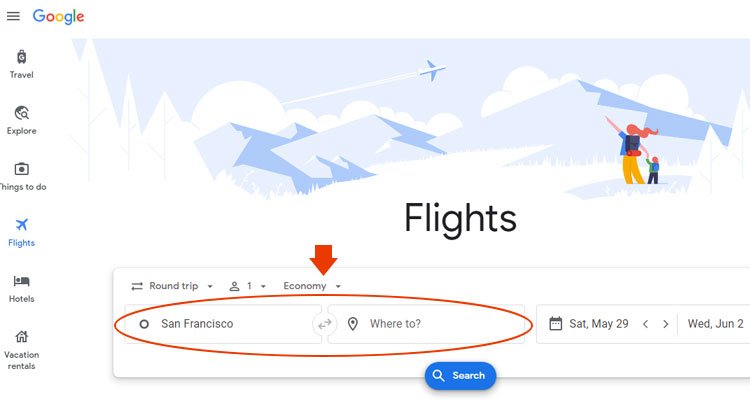
Google Flights is the quickest tool to learn and the one we suggest opening first. Results load almost instantly, and the layout stays clean even for complicated trips.
What we like
- Date grid and price graph let you see cheaper days around your dates at a glance.
- Price insights tell you whether the current fare is low, typical or high for that route.
- Price tracking emails you when the fare changes on a route you follow.
- Explore map helps when you want to browse destinations by price from your home airport.
- Multi-airport search is handy if you live between two airports.
- Clear labels mark itineraries made of separate tickets booked together.
- On some itineraries Google also offers a price guarantee that refunds the difference if a tracked fare drops after you book, up to a yearly limit.
Watch out for: Google Flights does not sell tickets, and it may not show every ultra-low-cost airline or every agency price. Use it as your baseline, then check one other engine.
Pro tip: switch on price tracking as soon as you pick a route, even if you are not ready to book.
Who should use it: anyone who wants a quick, reliable baseline, and travelers who like to follow a fare for a few weeks before buying. It is especially good for first-time searchers because there is almost nothing to learn.
Who might skip it: travelers hunting for the very lowest fare built from several budget airlines, or those who need an airline that keeps its fares off comparison sites.
Bottom line: open Google Flights first, note the price, and use that number as the benchmark every other site has to beat.
2. Skyscanner: Best for Flexible Dates and Destinations

Skyscanner was founded in Edinburgh in 2003 and has been owned by Trip.com Group since 2016. Its biggest strength is searching without a fixed plan.
What we like
- “Everywhere” search lists destinations from your home airport, ranked by price.
- Whole-month view shows the price of every day so you can spot the cheapest dates quickly.
- Price alerts notify you when fares on a tracked route change.
- Wide airline coverage, including many budget carriers.
Watch out for: the fare you see can occasionally differ from the one on the booking page, and you book through a third party, so changes are handled by whoever sold the ticket.
Pro tip: combine “Everywhere” with the whole-month view to find the cheapest place and the cheapest day, then compare that route on a second engine.
Who should use it: flexible travelers, backpackers, students and anyone planning a trip around the cheapest dates rather than fixed ones. It also works well for brainstorming when you have a budget but no destination.
Who might skip it: travelers with fixed dates and a fixed route who want the cleanest, fastest experience. Google Flights is often simpler in that case.
Bottom line: use Skyscanner to decide where and when to go, then verify the exact fare on a second engine.
3. Kayak: Best for Filters, Bag Fees and Price Forecasts

Kayak is a U.S. metasearch engine founded in 2004 and part of Booking Holdings since 2013.
What we like
- Bag filter shows carry-on and checked-bag fees for each fare before you click through, which matters a lot on budget airlines.
- Detailed filters for layover length, number of stops, airline and airports.
- Price forecast on many routes suggests whether fares may rise or fall in the near term.
- Hacker Fares combine two separate one-way tickets when that is cheaper than a round trip.
- Explore map for flexible destination ideas.
Watch out for: the page is busier than Google Flights, with more ads and upsells. Hacker Fares are two separate bookings, so a change or cancellation can be more complicated.
Pro tip: enter your bags first, then compare fares. A cheap base fare can become the most expensive option once luggage is added.
Who should use it: families, travelers with checked bags, and anyone comparing budget airlines where baggage rules differ widely. The filters are also useful for avoiding very long layovers or specific airports.
Who might skip it: people who prefer a minimal screen with few distractions.
Bottom line: Kayak is the best tool for answering one question: what will this trip really cost once bags are included?
4. Momondo: Best Second Opinion and Price Calendar

Momondo is a Danish metasearch engine that has been part of Booking Holdings since 2017. It is known for a colour-coded price calendar that shows cheaper and pricier days instantly.
What we like
- Price calendar makes it easy to shift your trip by a day or two.
- Price alerts for routes you are watching.
- Detailed filters for stops, bags and flight times.
Watch out for: Momondo shares a parent company with Kayak, so the results often look alike. A very low fare may also send you to a booking partner you have never heard of, so read the cancellation terms and check the seller before paying.
Pro tip: if you already searched on Kayak, use an engine from a different company as your second check.
Who should use it: travelers researching international fares, and anyone who likes to see a whole month of prices in color before choosing a date.
Who might skip it: people who already checked Kayak and want a truly independent comparison, since both belong to Booking Holdings and often show similar results.
Bottom line: Momondo is a handy price-research tool, but pair it with an engine from a different company.
5. Kiwi.com: Best for Mixing Airlines on One Booking
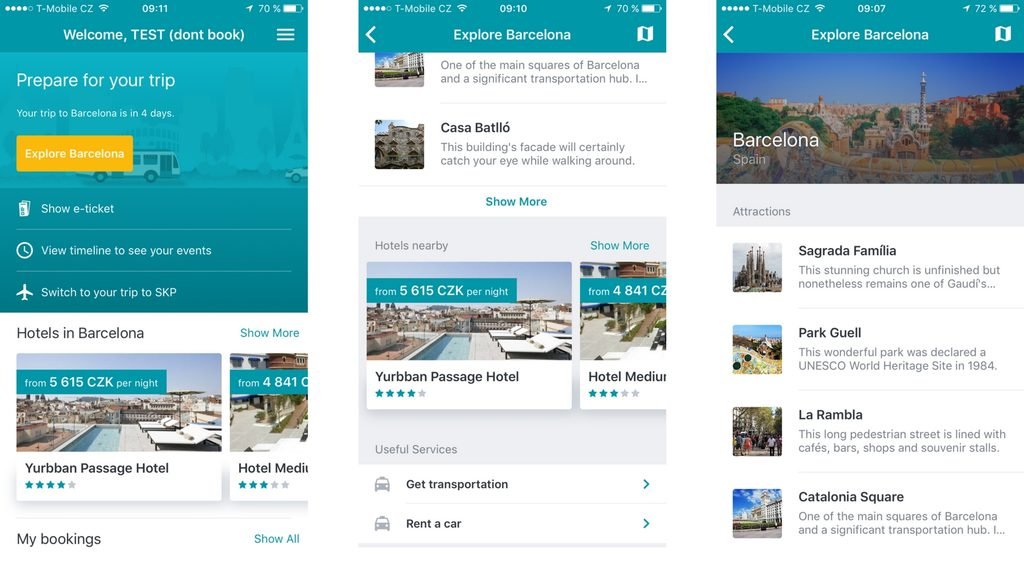
Kiwi.com is a Prague-based platform that sells tickets directly. Its signature feature is virtual interlining, which links flights from different airlines into one booking. It has also been an approved Ryanair partner since January 29, 2024.
What we like
- Finds creative, low-cost routes that other tools miss.
- Kiwi.com Guarantee (added at checkout) is designed to help if a delay or cancellation breaks your connection on an eligible booking.
- Smart multi-city search can find the cheapest order for several stops.
Watch out for: on self-transfer routes you usually collect and re-check your bags between flights, so leave plenty of connection time. Because Kiwi.com is the seller, changes go through it, not the airline.
Pro tip: add nearby airports and keep your dates flexible. Budget-airline combinations often appear from secondary airports.
Who should use it: budget travelers who are comfortable with some planning, especially for trips within Europe where low-cost airlines dominate.
Who might skip it: anyone with a tight schedule, an important event the next day, or a preference for having the airline itself handle changes. Self-transfer trips add risk if the first flight runs late.
Bottom line: Kiwi.com can find routes other tools cannot, so check it whenever the standard results look expensive. Just build in generous connection time.
6. Priceline: Best for Bundling Flight, Hotel and Car
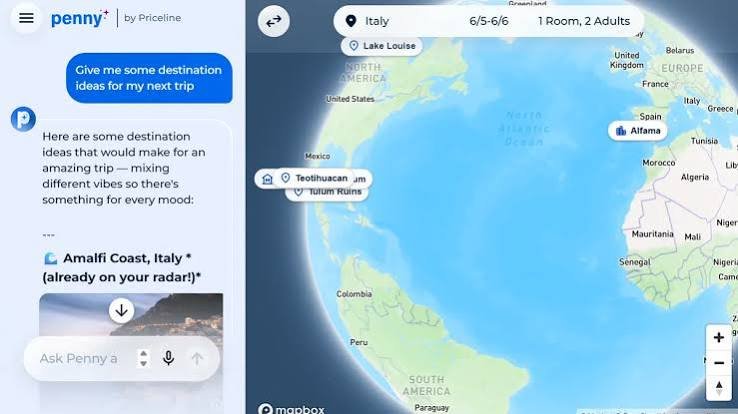
Priceline is an online travel agency, so you pay and manage the trip with them. Bundling a flight with a hotel or rental car can unlock prices you would not see when booking each part separately.
What we like
- One booking and one support line for the whole trip.
- Package pricing that can beat booking each piece alone.
Watch out for: always confirm that the price you saw carries through every checkout screen, including taxes and fees. For a simple one-way or round-trip flight, a metasearch engine plus a direct airline booking is usually cleaner.
Pro tip: price the bundle, then price the same flight and hotel separately. Only book the package if it is clearly cheaper.
Who should use it: families and vacation planners who want one booking and one support contact for the flight, hotel and car.
Who might skip it: travelers booking a simple flight on its own, who usually get a cleaner experience with a metasearch engine and a direct airline booking.
Bottom line: treat Priceline as a package-comparison tool, not as your first stop for a standalone ticket.
Honorable Mentions
- Skiplagged: known for “hidden-city” fares, where you book a flight to a farther city and leave the trip at your layover. It can be cheaper, but airlines may penalize it, you should not check bags, and it only works on one-way trips. Read your airline’s rules first and use it with caution.
- Going (formerly Scott’s Cheap Flights): not a search engine, but a deal-alert service that emails low fares from your home airport. Best for flexible travelers.
- Hopper: a mobile app built around price predictions and alerts. Predictions are guesses, so do not rely on them if you must book today.
- Omio: compares flights with trains and buses, which is useful for short trips in Europe.
- Southwest Airlines: historically sells its fares only on its own website, so check southwest.com separately if it flies your route.
Should You Book Through a Search Engine or Directly With the Airline?
This is one of the most common questions travelers ask, and the honest answer is: compare on a search engine, then book direct when the prices are close.
Why booking direct often wins
- You have one company responsible for your trip, so delays, cancellations and schedule changes are easier to sort out.
- Your frequent flyer number, seat selection and special requests are simpler to manage.
- Refunds go straight from the airline to you, with no middleman.
When booking through an agency can make sense
- The agency is clearly cheaper after fees and the saving is worth the extra risk.
- You are combining airlines on one itinerary, as Kiwi.com does.
- You are bundling a flight with a hotel or car and the package price beats booking separately.
Before you pay any agency, check three things: the total price including fees, the cancellation and refund policy, and who you must contact if the airline changes your flight. If any of those answers is unclear, that is a good reason to book direct instead.
Best Flight Search Engines by Type of Traveler
Different trips call for different tools. Use this section as a shortcut if you already know what kind of traveler you are.
Budget travelers. Start with Skyscanner’s whole-month view or Google Flights’ date grid to find the cheapest days, then check Kiwi.com for multi-airline combinations. Use Kayak’s bag filter to make sure the cheap fare stays cheap once luggage is included.
Families. Total cost matters more than the headline fare, because checked bags and seat selection are multiplied by every traveler. Kayak’s bag fees view and Priceline’s bundles are the most useful here. Avoid risky self-transfer routes when traveling with children.
Flexible and spontaneous travelers. Skyscanner’s “Everywhere” search and the Explore maps on Google Flights and Kayak let you start with a budget instead of a destination. Pair them with a price alert so you can act when a good fare appears.
International travelers. Use Google Flights for a baseline, Momondo for price research, and Skyscanner to compare nearby airports. For Europe, Kiwi.com and Omio add routes and train options that other tools miss.
Business travelers. Reliability matters more than the lowest fare. Google Flights is fast and clear, and booking directly with the airline keeps changes simple if your meeting moves.
Travelers using points or miles. Cash search engines will not show award seats, so check the airline’s own site or an award-search tool and compare the points price with the cash fare you found.
Who Owns What? (Why Checking Two Sites Is Not Always Two Opinions)
Some of the biggest names are owned by the same company, which is why their results often overlap.
| Company | Brands you may know |
| Booking Holdings | Kayak, Momondo, Priceline, Agoda |
| Expedia Group | Expedia, Orbitz, Travelocity |
| Trip.com Group | Skyscanner |
| Alphabet | Google Flights |
| Independent | Kiwi.com, Omio |
For a real second opinion, compare engines from different owners, for example Google Flights plus Skyscanner, or Kayak plus Kiwi.com.
Which Flight Search Engine Should You Use?
| If you… | Start with | Then check |
| Know your exact route and dates | Google Flights | Kayak or Skyscanner |
| Can travel any time or to many places | Skyscanner | Google Flights Explore |
| Are flying a budget airline with bags | Kayak (bag filter) | Kiwi.com |
| Want the lowest international fare | Momondo | Google Flights |
| Need a multi-airline route in Europe | Kiwi.com | Omio for trains |
| Are booking a full vacation | Priceline | The same trip booked separately |
A Simple 5-Step Method to Find the Cheapest Flight
- Run your baseline search on Google Flights. Note the price and the airline.
- Switch on flexible dates and nearby airports. Moving a trip by a day or flying from a second airport can change the fare noticeably.
- Check a second engine from a different company. Skyscanner or Kiwi.com are good choices after Google Flights.
- Compare the total price with bags and seat fees, not just the headline fare.
- Book direct with the airline when prices are close. You will deal with one company if your flight changes.
If you are not ready to book, set a price alert. And if you do find a fare you like, remember the U.S. Department of Transportation’s 24-hour rule: for most bookings made directly with an airline at least seven days before departure, you can cancel within 24 hours for a full refund or the airline must hold the fare. Check the airline’s own policy for details.
Common Mistakes to Avoid
- Trusting the first price you see. Displayed prices can lag behind the booking page.
- Ignoring baggage and seat fees. Budget fares can cost more than regular fares once extras are added.
- Booking through an unknown agency without reading the terms. Check cancellation and refund rules.
- Using only one engine. No tool is cheapest on every route.
- Overlooking separate tickets. If two tickets are booked separately, the second airline usually does not have to rebook you after a delay on the first.
How to Read Flight Search Results Like a Pro
A list of fares can look simple until you notice what is missing. Here is what to check on every result before you click “select”:
- Total travel time, not only the price. A fare that saves $30 but adds six hours of layovers may not be a bargain.
- Layover length and airport. Very short connections risk a missed flight, and very long ones waste a day. A change of airport inside a city is a warning sign.
- Fare type. The cheapest option is often a basic economy fare, which on many airlines limits seat choice, carry-on bags and changes. Read what is included before you buy.
- Baggage fees. Use the bag filter if the site has one, or open the fare details to see the carry-on and checked-bag costs.
- Separate tickets. If the itinerary is two tickets booked together, a delay on the first flight may not be covered by the second airline. Google Flights and Kiwi.com both label these.
- Booking seller. Notice whether you are paying the airline or an agency, and who will handle changes.
- Currency and taxes. On international searches, confirm the currency and that taxes are included in the total.
- Sorting. “Cheapest” and “Best” are different lists. “Best” usually balances price with duration, so look at both.
Spending two minutes on these checks prevents most of the unpleasant surprises people blame on “fake” prices.
Smart Search Habits That Save Money
The tool matters, but how you search matters just as much. These habits work on every engine in this guide:
- Be flexible by a day or two. Date grids and price calendars exist because small date changes can move a fare noticeably. Let the calendar show you, rather than guessing.
- Try nearby airports. A second airport within driving distance sometimes has cheaper fares or more nonstop options. Add the extra driving or train cost before deciding.
- Compare a round trip with two one-ways. Some engines build this automatically, as Kayak does with Hacker Fares, but it can also be worth trying by hand.
- Test midweek and weekend travel. Some routes are cheaper on certain days of the week, but it varies, so check the calendar instead of relying on a rule.
- Use price insights. Tools such as Google Flights tell you whether a price is low, typical or high for the route, which helps you decide whether to book or wait.
- Set alerts early. Start tracking as soon as you have a route in mind. You will see how the price moves and can book when it fits your target.
- Search again before you buy. Prices change often, so refresh the results and confirm the final price on the booking page.
There is no universal best day or perfect booking window, and anyone promising one is guessing. The reliable method is to track the route, compare engines from different companies, and buy when the price meets your budget.
Don’t Forget Your Points and Miles
Every engine above shows cash prices. If you hold airline miles or transferable credit card points, check whether the same seat can be booked with points, especially for long-haul or premium cabins. Award search is a separate process, usually done on the airline’s website or a dedicated award-search tool, and then you compare the points price against the cash price you just found.
Frequently Asked Questions
Which flight search engine is the cheapest?
No engine is always the cheapest. Google Flights is a reliable baseline, while Kayak, Momondo, Skyscanner and Kiwi.com sometimes find lower fares through agencies or multi-airline routes. Compare at least two engines and confirm the final price before paying.
Is Google Flights better than Skyscanner?
They excel at different things. Google Flights is faster and cleaner when you have a fixed route and dates. Skyscanner is stronger when you are flexible, thanks to its “Everywhere” search and whole-month view. Many travelers use both.
Is it cheaper to book directly with the airline or through a search engine?
The price is often the same. Use a search engine to compare, then book directly with the airline if the prices are close. That way the airline handles changes, refunds and delays.
Do flight search engines show every airline?
No. Some budget airlines and a few major carriers limit where their fares appear, so check the airline’s own website for your route before you decide.
Are flight search engines free to use?
Yes. Metasearch engines are free for travelers and earn money from referrals or advertising. Online travel agencies may add service fees, so compare the all-in total.
Do price alerts really help?
They can. Alerts are useful for watching a route over time, but they cannot predict every drop, so set a target price and be ready to book when it appears.
Can I book flights with points on these sites?
Generally no. Google Flights, Skyscanner, Kayak and similar tools show cash fares. To use points, search the airline’s award calendar or an award-search tool.
What is the difference between a metasearch engine and an online travel agency?
A metasearch engine compares fares and sends you elsewhere to book, while an online travel agency sells you the ticket itself. With an agency, changes and refunds usually go through the agency rather than the airline, so read its policies before you pay.
How many flight search engines should I check?
Two or three is enough for most trips. Choose engines owned by different companies, such as Google Flights and Skyscanner, so that you get a genuine second opinion instead of the same results twice.
Are hidden-city tickets legal?
Buying one is generally not illegal, but airlines often forbid the practice in their terms and may cancel the rest of your itinerary, remove miles or close your account. You also cannot check a bag, because it goes to the final destination on the ticket. Read the airline’s rules and use this tactic with caution.
Why is the price different when I click through to book?
Some engines show saved prices that update only when you reach the seller. Fares also change often, and a booking site may add fees or taxes. Always confirm the final total on the last page before you pay.
Which is better for flexible travel, Skyscanner or Google Flights?
Skyscanner’s “Everywhere” search and whole-month view are built for open-ended planning. Google Flights offers a date grid, price graph and Explore map, and it is usually faster for a fixed route. Many travelers use both.
The Bottom Line
Start with Google Flights for a fast baseline, use Skyscanner when you are flexible, add Kayak to see bag fees and filters, and try Kiwi.com when mixing airlines could save money. Always compare engines from different companies, look at the total price with bags, and book direct when the price is close.
Have a favorite tool or a trick that saved you money? Tell us in the comments and we will add the best tips to this guide.