
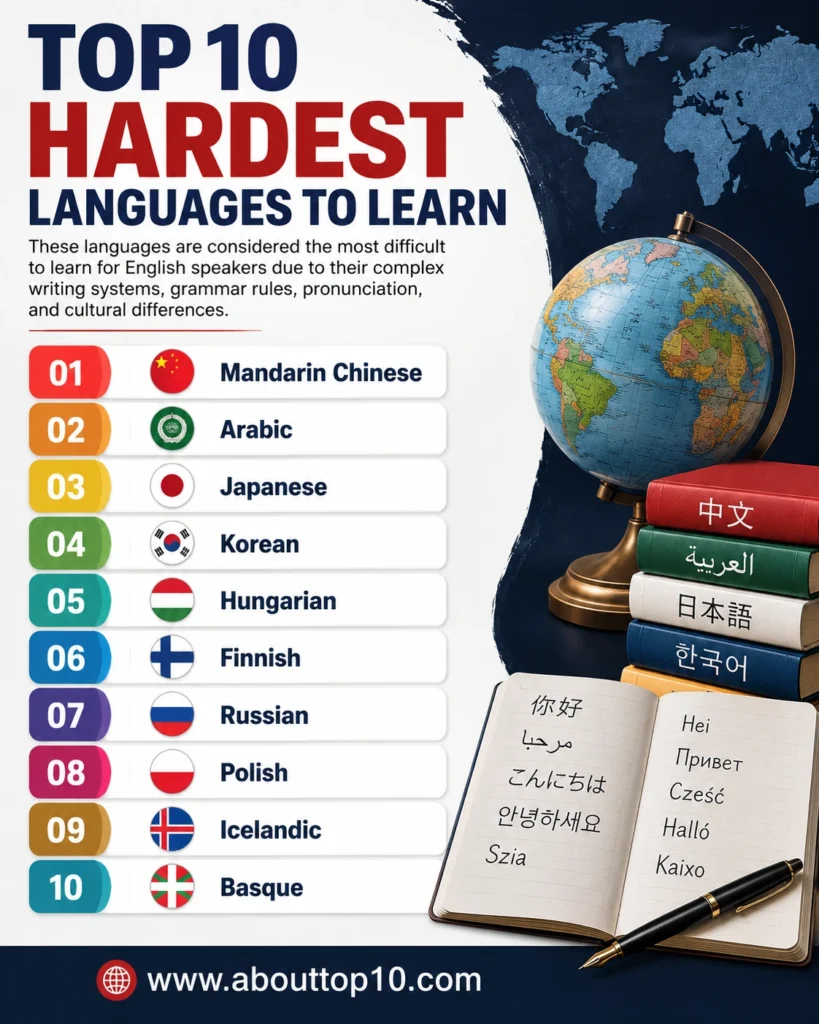
The hardest languages to learn for English speakers, according to the U.S. Foreign Service Institute and linguistic research, are Mandarin Chinese, Arabic, Japanese, Korean, Hungarian, Finnish, Russian, Polish, Icelandic, and Basque. Difficulty stems from unfamiliar writing systems, complex grammar, tonal pronunciation, and limited vocabulary overlap with English.
Top 10 Hardest Languages to Learn
Anyone who has tried to learn a second language knows that not all languages are created equal in difficulty. Spanish might click for you in a year. Mandarin might take four times as long.
That’s not just a feeling. It’s measurable. The U.S. Foreign Service Institute (FSI), which has trained American diplomats since the 1950s, has tracked exactly how many classroom hours it takes English-speaking adults to reach professional working proficiency in dozens of languages.
This article uses that data, along with input from linguistic research on grammar complexity, writing systems, and phonology, to build an honest, well-sourced ranking of the ten hardest languages to learn.
We’re writing this for real learners: students picking a language requirement, travelers preparing for a big trip, professionals eyeing an international role, and curious readers who just want to understand why Japanese takes so much longer to learn than French. Whatever your reason for being here, you’ll walk away with a clear, practical picture of what makes these languages hard, and how to actually learn them.
Quick Verdict
Mandarin Chinese, Arabic, Japanese, and Korean sit at the very top of nearly every credible difficulty ranking, largely because the FSI classifies all four as “Category IV” or “super-hard” languages, requiring around 2,200 classroom hours to reach professional proficiency , roughly four times longer than Spanish or French.
Beyond the FSI’s diplomat-focused list, linguists also point to European languages like Hungarian, Finnish, Polish, and Icelandic, and isolate languages like Basque, as exceptionally difficult due to grammar structures with no real English equivalent, even though they use a familiar Latin alphabet.
How We Ranked These Languages
This ranking blends two complementary sources of evidence:
- FSI classroom-hour data: The Foreign Service Institute’s four-category system remains the most widely cited, evidence-based measure of language difficulty for native English speakers, based on decades of real classroom outcomes with adult learners.
- Linguistic complexity factors: Since FSI’s list is built around languages the U.S. government actually needs diplomats to learn, it doesn’t include every difficult language in the world. We supplemented FSI data with well-documented linguistic factors, cited from university linguistics research and frameworks like the CEFR (Common European Framework of Reference for Languages), to include additional languages recognized as exceptionally difficult even though they fall outside FSI’s core list.
We evaluated each language across five dimensions:
- Writing system: Is it alphabetic, syllabic, or logographic? Does it share any characters with the Latin alphabet?
- Grammar complexity: Case systems, verb conjugation patterns, word order, and agglutination (stacking suffixes to build meaning).
- Pronunciation: Tonal systems, unfamiliar consonant or vowel sounds, and stress patterns.
- Vocabulary distance: How much (or little) shared vocabulary root exists with English.
- Cultural and contextual layers: Honorific systems, formality registers, and idiomatic structures that don’t translate directly.
It’s worth noting upfront: difficulty is relative to your native language. A Mandarin speaker will find Japanese far easier than a Spanish speaker will, thanks to shared vocabulary and character systems. This list is built specifically from the perspective of a native English speaker, which is how the FSI data itself is structured.
Top 10 Hardest Languages to Learn (Quick List)
- Mandarin Chinese
- Arabic
- Japanese
- Korean
- Hungarian
- Finnish
- Russian
- Polish
- Icelandic
- Basque
Language #1 Overview: Mandarin Chinese
FSI Category: IV (super-hard) | Estimated hours: ~2,200

Mandarin tops nearly every difficulty list, and for good reason. It’s a tonal language, meaning the same syllable can carry entirely different meanings depending on pitch. The syllable “ma,” for example, can mean mother, horse, hemp, or scold, depending on which of the four tones you use.
Then there’s the writing system. Mandarin uses logographic characters rather than an alphabet. You need roughly 3,000 characters for basic literacy, and university-educated native speakers typically know around 8,000. There’s no phonetic shortcut , each character has to be learned individually.
The grammar, interestingly, is one of the easier parts. Mandarin has no verb conjugation, no grammatical gender, and no plural forms. The real challenge is almost entirely in pronunciation and the writing system.
Example: 你好 (nǐ hǎo) means “hello,” but getting the rising tone on “hǎo” wrong can make the phrase sound off or confusing to native speakers.
Language #2 Overview: Arabic
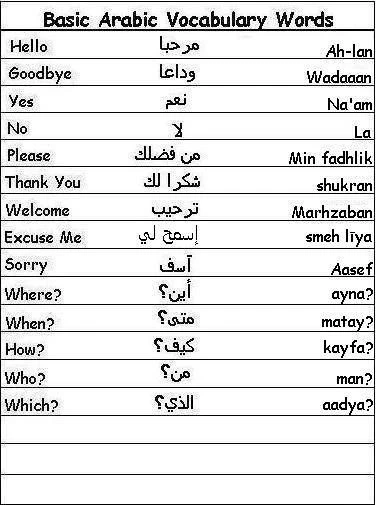
FSI Category: IV (super-hard) | Estimated hours: ~2,200
Arabic is often considered the hardest language on this list in practical terms, mainly because of a problem unique to it: diglossia. Modern Standard Arabic (MSA) is used in writing, news media, and formal contexts, but everyday spoken Arabic varies by region , Egyptian, Gulf, Levantine, Maghrebi, and others , and these dialects are not always mutually intelligible.
That means a learner focused only on MSA might struggle to hold a casual conversation in Cairo or Beirut, since real-world speech doesn’t match the textbook.
Arabic’s script runs right to left, uses a root-based system where three consonants form the core of related words, and includes sounds that simply don’t exist in English, like the pharyngeal “ع” (ayn). Grammatically, verbs conjugate by gender, and nouns have dual forms in addition to singular and plural.
Example: The root ك-ت-ب (k-t-b) relates to writing, generating words like كتاب (kitab, “book”), كاتب (katib, “writer”), and مكتبة (maktaba, “library”) , a logical but entirely unfamiliar system for English speakers used to independent word roots.
Language #3 Overview: Japanese
FSI Category: IV (super-hard) | Estimated hours: ~2,200
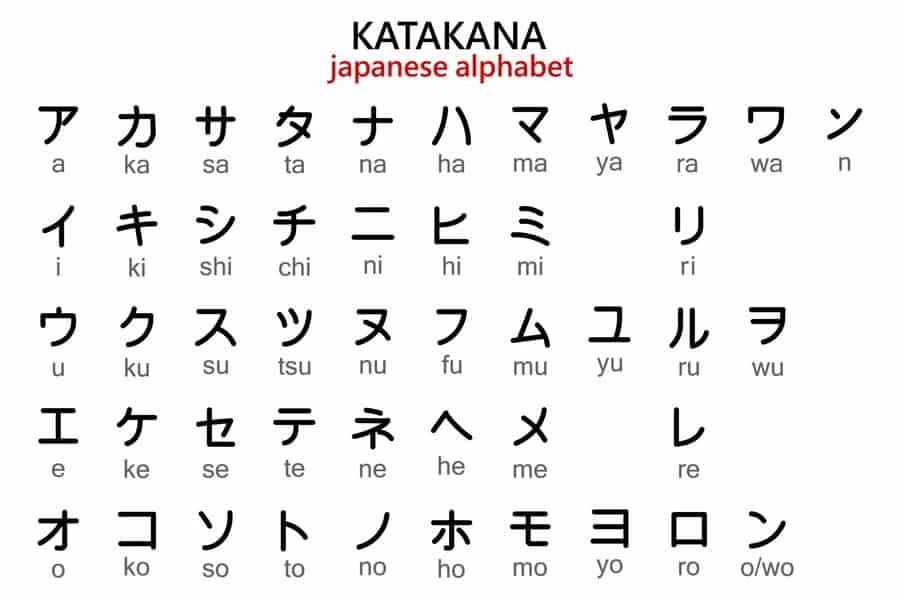
Japanese is famous for requiring fluency in three writing systems simultaneously: hiragana and katakana, two complete phonetic syllabaries, plus kanji, several thousand Chinese-derived characters used for most nouns and verb stems.
Grammatically, Japanese is agglutinative, meaning verb endings stack to add layers of meaning: tense, politeness, negation, and causation can all be built onto a single verb stem. Word order is also flipped from English (subject-object-verb rather than subject-verb-object).
Then there’s the honorific system. Japanese has distinct speech levels depending on your relationship to the person you’re speaking to, and using the wrong register can come across as rude or oddly formal, even if your grammar is technically correct.
Example: “I eat” can be 食べる (taberu, plain form), 食べます (tabemasu, polite form), or 召し上がる (meshiagaru, honorific form for someone else’s action) , three grammatically distinct ways to express the same basic idea.
Language #4 Overview: Korean
FSI Category: IV (super-hard) | Estimated hours: ~2,200
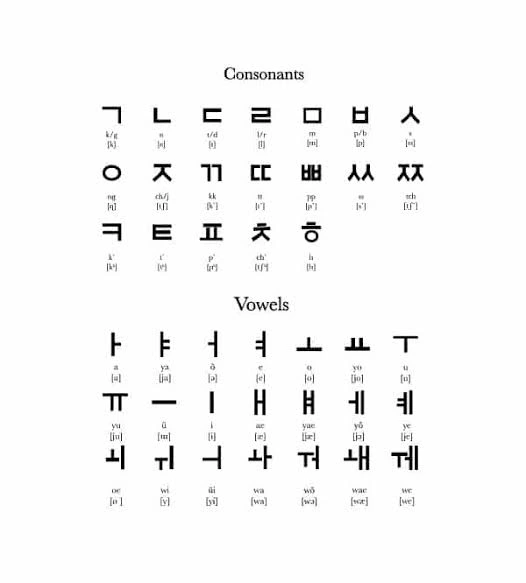
Korean’s writing system, Hangul, is actually one of the most elegantly designed alphabets in the world and can be learned in a weekend. The difficulty lies almost entirely in the grammar.
Korean uses a complex system of particles that mark grammatical roles (subject, object, topic) rather than relying on word order the way English does. It also has an intricate honorific system, similar to Japanese, with different verb endings depending on the listener’s age, social status, and your relationship to them.
Verb conjugation is agglutinative as well, with tense, formality, and mood all layered onto a single verb stem, which can make sentences look intimidatingly long to beginners even when the core meaning is simple.
Example: 밥을 먹었어요 (bab-eul meogeosseoyo) means “I ate rice/food,” but that single verb form encodes past tense and a polite speech level, concepts English handles with entirely separate words.
Language #5 Overview: Hungarian
FSI Category: III (hard) | Estimated hours: ~1,100
Hungarian isn’t part of FSI’s hardest tier, but linguists frequently rank it among the most challenging languages using a familiar alphabet. It’s a Uralic language, unrelated to the Indo-European family that includes English, French, German, and most European languages.
The standout challenge is Hungarian’s case system: nouns can take on 18 or more grammatical cases (some linguists count over 20), each changing the ending of a word depending on its grammatical function, roughly equivalent to what English handles with prepositions like “to,” “from,” “in,” and “with.”
Vowel harmony adds another layer, requiring suffixes to match the vowel quality of the word’s root, and vocabulary shares almost no roots with English.
Example: “Ház” (house) becomes “házban” (in the house), “házból” (from the house), and “házba” (into the house) , three different English prepositions collapsed into three different Hungarian suffixes.
Language #6 Overview: Finnish
FSI Category: III (hard) | Estimated hours: ~1,100
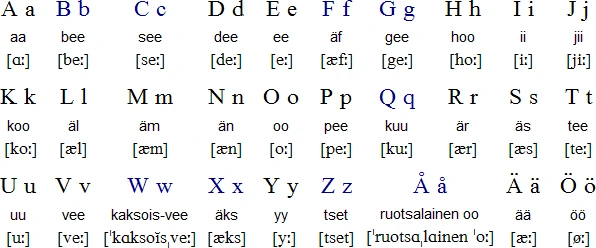
Finnish, like Hungarian, is Uralic rather than Indo-European, and shares the same core challenge: an extensive case system, with 15 grammatical cases governing how nouns change form based on their role in a sentence.
Finnish also has consonant gradation, where consonants within a word shift depending on the grammatical form, and long compound words that can look overwhelming to beginners but follow logical, learnable patterns once you understand the building blocks.
On the plus side, Finnish spelling is highly phonetic. Once you learn the sound-letter correspondences, you can read almost any word correctly, which is more than can be said for English or French.
Example: “Talo” (house) becomes “talossa” (in the house) and “taloista” (from the houses) , case endings doing grammatical work that English spreads across multiple words.
Language #7 Overview: Russian
FSI Category: III (hard) | Estimated hours: ~1,100
Russian introduces English speakers to two major new challenges at once: the Cyrillic alphabet and a six-case grammatical system that changes noun, adjective, and pronoun endings depending on their role in a sentence.
Verb aspect is another common sticking point. Russian verbs come in pairs, an “imperfective” form for ongoing or repeated actions and a “perfective” form for completed ones, a distinction English generally handles with context rather than a separate verb form.
Pronunciation includes palatalized consonants (a subtle “softening” of certain sounds) that don’t have a direct English equivalent, and take real practice to hear and reproduce accurately.
Example: “Я читал книгу” (ya chital knigu, “I was reading/read a book,” imperfective) versus “Я прочитал книгу” (ya prochital knigu, “I finished reading the book,” perfective) , a grammatical distinction English speakers have to consciously learn to make.
Language #8 Overview: Polish
FSI Category: III (hard) | Estimated hours: ~1,100
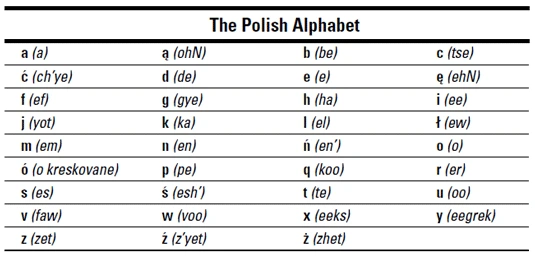
Polish uses the Latin alphabet, which makes it look more approachable on paper than Russian or Arabic, but the grammar is arguably just as demanding. Polish has seven grammatical cases, complex consonant clusters, and a system of noun gender that affects adjective and verb agreement throughout a sentence.
Polish consonant clusters are a notorious hurdle: words like “źdźbło” (blade of grass) pack multiple consonant sounds together in ways that don’t occur in English, requiring real practice to pronounce naturally.
Like Russian, Polish also uses verb aspect pairs (imperfective and perfective), adding another layer of grammatical nuance beyond simple tense.
Example: “Dom” (house) becomes “domu” (of the house), “domowi” (to the house), and “domem” (with the house) , again, a full case system doing work that English distributes across prepositions.
Language #9 Overview: Icelandic
FSI Category: III (hard) | Estimated hours: ~1,100
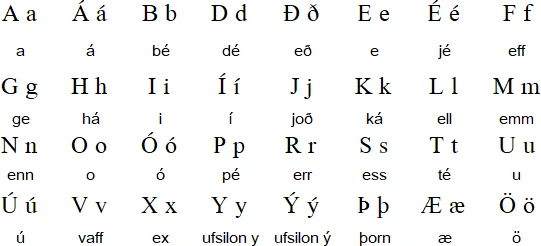
Icelandic is a North Germanic language, technically a relative of English, but it has changed so little since Old Norse that modern Icelanders can still read centuries-old sagas with relative ease. That linguistic conservatism is exactly what makes it hard for modern learners.
Icelandic retains a four-case grammatical system, complex noun declensions, and grammatical gender, all of which English shed centuries ago. Its vocabulary also resists borrowing foreign words, instead coining new native compounds for modern concepts, which means English speakers get very little vocabulary head start compared with, say, German or Dutch.
Pronunciation includes distinctive sounds like the voiceless “hl” and “hr” consonant clusters, which take real ear-training to produce and recognize.
Example: Instead of borrowing a word like “computer,” Icelandic uses “tölva,” a native compound blending “tala” (number) and “völva” (prophetess) , illustrating how little English vocabulary knowledge transfers directly.
Language #10 Overview: Basque
FSI Category: Not formally ranked (limited FSI data) | Estimated hours: Comparable to Category IV based on linguistic distance
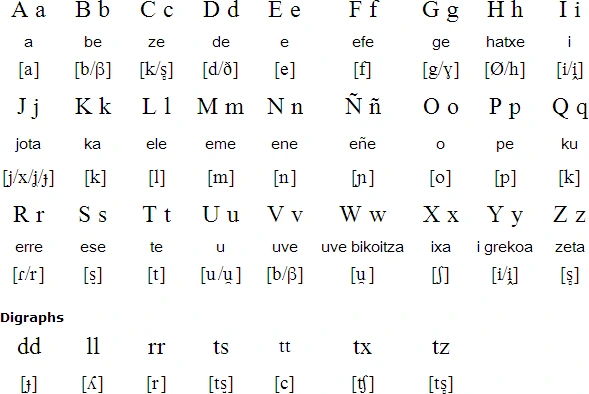
Basque, spoken in parts of northern Spain and southwestern France, is a language isolate, meaning it isn’t related to any other living language family, including the Indo-European languages that surround it geographically.
That isolation means there’s essentially no vocabulary overlap with English, French, or Spanish to lean on. Basque also uses an ergative-absolutive grammar system, a structural approach to marking subjects and objects that works fundamentally differently from the nominative-accusative system English speakers are used to.
Verb conjugation in Basque can encode the subject, object, and indirect object all within a single verb form, a level of grammatical density that has no real English parallel.
Example: “Dakartzat” can translate roughly to “I bring them (here),” with the subject (“I”), object (“them”), and directional information all packed into one verb form rather than expressed as separate words.
Difficulty Comparison Table
| Rank | Language | FSI Category | Est. Hours | Primary Challenge |
| 1 | Mandarin Chinese | IV | ~2,200 | Tones, logographic writing system |
| 2 | Arabic | IV | ~2,200 | Diglossia, script, root-based grammar |
| 3 | Japanese | IV | ~2,200 | Three writing systems, honorifics |
| 4 | Korean | IV | ~2,200 | Particles, honorific verb system |
| 5 | Hungarian | III | ~1,100 | 18+ grammatical cases |
| 6 | Finnish | III | ~1,100 | 15 grammatical cases, consonant gradation |
| 7 | Russian | III | ~1,100 | Cyrillic script, 6 cases, verb aspect |
| 8 | Polish | III | ~1,100 | 7 cases, consonant clusters |
| 9 | Icelandic | III | ~1,100 | Archaic grammar, minimal loanwords |
| 10 | Basque | Not FSI-rated | ~2,000 (estimated) | Language isolate, ergative grammar |
Hour estimates reflect FSI data for full-time classroom instruction with professional instructors. Self-study learners typically need 1.5–2x longer to reach comparable proficiency.
What Makes a Language Difficult to Learn?
Across every language on this list, five recurring factors drive difficulty:
- Writing system distance: Logographic systems (Mandarin) and multi-script systems (Japanese) require memorizing thousands of individual characters rather than applying a small set of phonetic rules.
- Grammar complexity: Extensive case systems (Hungarian, Finnish, Russian, Polish) and agglutinative structures (Japanese, Korean, Basque) require a fundamentally different mental model of how sentences are built.
- Pronunciation and phonology: Tonal systems (Mandarin), unfamiliar consonants (Arabic, Icelandic), and sounds with no English equivalent all slow down listening and speaking skills.
- Vocabulary distance: Languages outside the Indo-European family (Mandarin, Japanese, Korean, Finnish, Hungarian, Basque) share very few word roots with English, removing a major shortcut available to learners of Spanish, French, or German.
- Cultural and contextual layers: Honorific systems (Japanese, Korean) and register-switching (Arabic diglossia) require social and cultural fluency alongside grammatical accuracy.
Which Language Is Hardest for English Speakers?
Based on FSI’s decades of classroom data, Mandarin Chinese, Arabic, Japanese, and Korean are officially tied at the top, all requiring roughly 2,200 hours to reach professional working proficiency.
In practical terms, many linguists point to Arabic as uniquely challenging beyond the raw hour count, because of diglossia: even after mastering Modern Standard Arabic, learners often still need to separately learn a regional dialect to hold everyday conversations.
Mandarin, by contrast, has simpler grammar than Arabic or Japanese, but its writing system alone represents one of the largest memorization tasks of any language on Earth.
Tips for Learning Difficult Languages Faster
- Start with sound before script. Build listening and speaking skills before tackling a complex writing system, especially for Mandarin, Japanese, and Arabic.
- Use spaced repetition systems (SRS) like Anki for vocabulary and character memorization. This is especially effective for Mandarin and Japanese kanji, where the volume of individual items to memorize is the primary bottleneck.
- Learn grammar patterns, not just rules. For case-heavy languages like Hungarian, Finnish, Russian, and Polish, drilling common noun-case pairings in context works better than memorizing abstract case tables.
- Immerse early, even imperfectly. Watching shows, listening to podcasts, or joining conversation exchanges (even at a beginner level) trains your ear for tones, stress patterns, and natural rhythm faster than textbook study alone.
- Target a specific dialect or register early if you’re learning Arabic, so you’re not caught off guard by the gap between Modern Standard Arabic and everyday speech.
- Study a related language first when possible. Learning Spanish before Portuguese is easy; there’s no such shortcut for most languages on this list, so budget realistic time from day one.
- Track your hours, not just your “level.” FSI’s data is hour-based for a reason , consistent, cumulative practice time is a better predictor of progress than motivation or “talent.”
Common Mistakes Language Learners Make
- Underestimating the writing system. Many beginners focus entirely on speaking and delay learning Mandarin characters or Arabic script, which creates a painful bottleneck later.
- Ignoring pronunciation early on. Skipping tone or sound training in the beginning often locks in bad habits that are much harder to correct after months of practice.
- Over-relying on translation apps. Apps are useful tools, but leaning on them too heavily can prevent the active recall needed to build genuine fluency.
- Studying grammar in isolation. Memorizing case tables or conjugation charts without using them in real sentences rarely transfers to actual conversation.
- Comparing your progress to easier languages. Comparing your six-month Japanese progress to a friend’s six-month French progress sets unrealistic expectations, given the FSI data shows a 4x difference in required hours.
- Avoiding speaking until “ready.” Waiting for confidence before speaking usually backfires; early, imperfect conversation practice accelerates fluency far more than passive study alone.
Best Resources for Learning Difficult Languages
| Resource Type | Best For | Examples |
| Spaced repetition apps | Character and vocabulary memorization | Anki, WaniKani (Japanese kanji) |
| Structured courses | Grammar foundations | FSI’s own public-domain course materials, Glossika |
| Conversation exchange | Speaking practice and pronunciation | Tandem, HelloTalk, iTalki |
| Immersion content | Listening comprehension and natural rhythm | Native-language podcasts, dramas, and news broadcasts |
| Reference frameworks | Tracking proficiency milestones | CEFR (A1–C2), ILR scale used by FSI |
Learners aiming for an internationally recognized proficiency benchmark often use the CEFR framework (A1 through C2) alongside FSI’s ILR-based scale, since many universities and employers reference CEFR levels directly in language requirements.
Final Verdict
There’s no getting around it: Mandarin, Arabic, Japanese, and Korean genuinely require more time and effort than almost any other language an English speaker can choose, according to decades of consistent FSI classroom data.
That said, “hardest” doesn’t mean “impossible,” and it definitely doesn’t mean “not worth it.” Millions of non-native speakers have reached fluency in every language on this list. The honest takeaway is simply this: go in with realistic expectations about the time commitment, and choose study methods that match the specific type of difficulty you’re facing, whether that’s a case system, a tonal system, or an entirely new script.
Finel Words
Learning any of the languages on this list is a genuine commitment, but it’s a well-documented, well-understood one. The FSI’s decades of classroom data give learners a realistic starting point, and understanding exactly which factors, whether grammar, script, or pronunciation, make a language difficult lets you build a study plan that actually addresses your specific challenge.
Whether you’re drawn to Mandarin for career opportunities, Korean for cultural interest, or Icelandic simply for the challenge, the path forward is the same: consistent hours, the right resources, and realistic expectations about the road ahead.
FAQs
What is the hardest language to learn in the world?
According to the U.S. Foreign Service Institute, Mandarin Chinese, Arabic, Japanese, and Korean are tied as the hardest languages for English speakers, each requiring around 2,200 classroom hours to reach professional proficiency.
Is Mandarin harder than Arabic?
They’re rated equally difficult by the FSI in terms of hours required, though the type of difficulty differs: Mandarin’s challenge is largely tonal and script-based, while Arabic’s is grammar, script, and dialect-based.
How long does it take to become fluent in a hard language?
FSI estimates roughly 2,200 classroom hours for Category IV languages like Mandarin and Japanese, though self-study learners typically need 1.5 to 2 times longer without professional instruction.
Why is Japanese considered so difficult?
Japanese requires fluency in three separate writing systems (hiragana, katakana, and kanji), an agglutinative grammar structure, and a complex honorific system tied to social context.
What makes Hungarian and Finnish so hard despite using the Latin alphabet?
Both languages belong to the Uralic family rather than the Indo-European family, meaning they share almost no vocabulary roots with English and use extensive grammatical case systems with 15 or more cases.
Is Basque related to Spanish or French?
No. Basque is a language isolate, meaning it has no known relation to any other living language family, despite being spoken in regions of Spain and France.
What is the FSI language difficulty ranking based on?
It’s based on decades of classroom outcome data tracking how many instructional hours English-speaking adult diplomats typically need to reach professional working proficiency in each language.
Are tonal languages always harder than non-tonal ones?
Tonal systems add a genuine layer of difficulty for English speakers, since English isn’t tonal, but overall difficulty also depends heavily on grammar and writing system, which is why some non-tonal languages, like Arabic, rank equally hard.
Does knowing another language make hard languages easier?
Yes, generally. Multilingual learners tend to acquire additional languages faster regardless of difficulty category, and speakers of related languages (for example, a Mandarin speaker learning Japanese) benefit from significant vocabulary or script overlap.
Is it worth learning one of the hardest languages?
Absolutely, particularly for career, academic, or personal reasons tied to regions where these languages are spoken. Difficulty affects timeline, not feasibility, and structured study plans can make even Category IV languages achievable.
Top 10 Most Dangerous Cities In America Leran More Click Here
- Top 10 Dangerous Dogs in 2026: Ranked by Bite Force & Risk
- Top 10 Long-Lasting Perfumes for Men That Actually Earn Their Price Tag
- Top 10 Cheapest States to Live In: The Complete 2026 Guide
- Top 10 Bass Lures Every Angler Should Have in Their Tackle Box
- Top 10 Hardest Languages to Learn | Shocking Report